
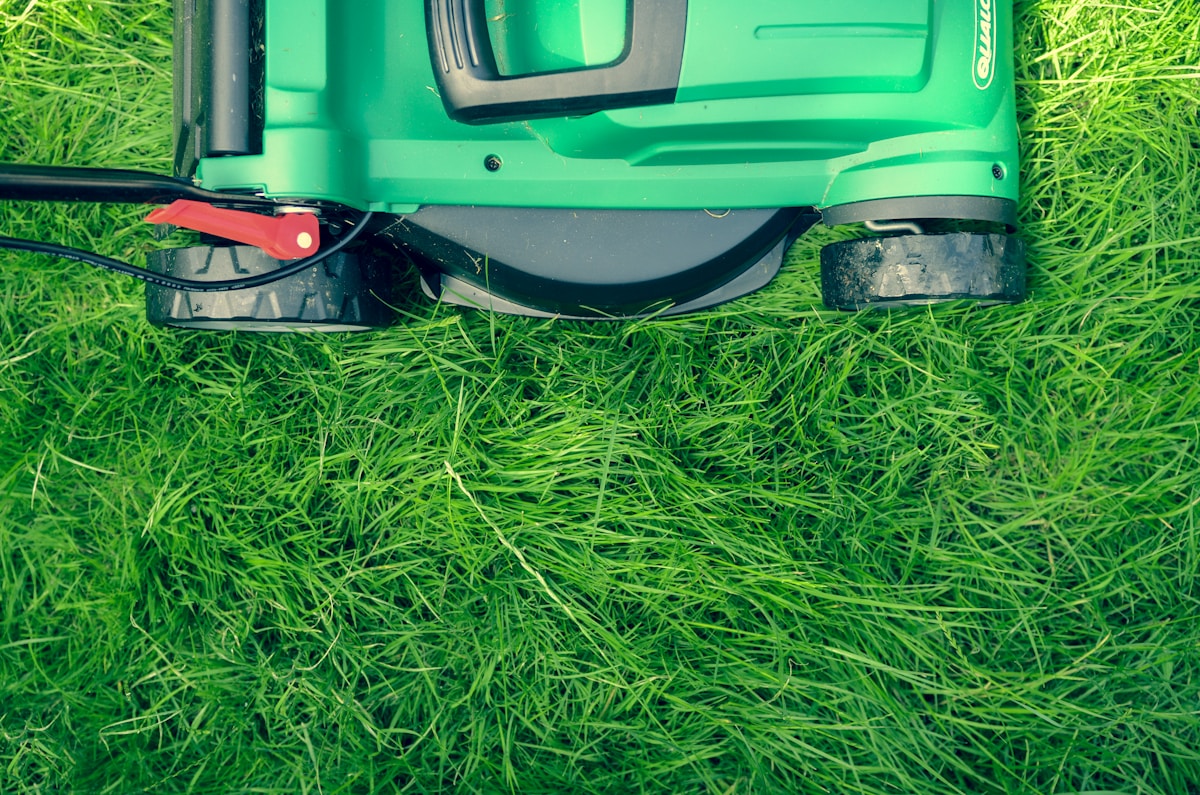
Mowing seems simple. Push the mower, cut the grass, done. But turf scientists at Purdue, Michigan State, and Iowa State all agree: most homeowners make the same five mistakes. The good news is they are easy to fix.
Mistake #1: Cutting Too Short
This is the most common mistake we see in Fort Wayne and Marion. Homeowners set their mower as low as it will go, thinking a short lawn looks neat and needs mowing less often.
The truth is the opposite. Purdue recommends keeping Kentucky bluegrass, ryegrass, and fescue at 3 inches or higher (AY-32-W). Why? Taller grass grows deeper roots. Deeper roots mean your lawn handles heat and drought better.
Michigan State adds another benefit: taller grass shades the soil, which helps block crabgrass seeds from sprouting. Iowa State recommends 3 to 3.5 inches during summer for the same reasons.
Think of it this way: the part of the grass you see above ground is like a solar panel. Cut it too short, and the plant cannot make enough food to stay healthy.
Mistake #2: Cutting Too Much at Once
Ever skip a week of mowing and then scalp the lawn to catch up? That shocks the grass. The rule is simple: never remove more than one-third of the blade at a time.
Purdue notes that if you mow at 3 inches, you should mow again when the grass reaches about 4.5 inches. That works out to roughly every 6 days during peak growing season. If you mow at 3.5 inches, you can wait about 9 days.
Cutting off more than a third stresses the plant, weakens roots, and opens the door to weeds and disease.
Mistake #3: Mowing with a Dull Blade
A dull mower blade tears the grass instead of cutting it cleanly. Michigan State says torn grass tips turn brown and create entry points for disease. Your lawn ends up looking grayish-brown a day or two after mowing.
Purdue recommends sharpening your blade 4 to 6 times per year. Michigan State suggests keeping a spare blade on hand and swapping it out once a month during mowing season. A sharp blade makes a clean cut that heals fast.
Mistake #4: Bagging Your Clippings
Many homeowners bag their grass clippings because they worry about thatch. But that is a myth. Grass clippings break down quickly and do not cause thatch buildup.
Purdue's AY-32-W says clippings return valuable nutrients to the soil. Michigan State research shows that leaving clippings on the lawn reduces your nitrogen fertilizer need by about 1 pound per 1,000 square feet per year. That saves money and feeds your lawn at the same time.
The University of Missouri ran a "Don't Bag It" program and found homeowners saved about 30% of their mowing time by skipping the bagging step.
Purdue sums it up nicely: "Mow high and let them lie."
Mistake #5: Mowing the Same Direction Every Time
If you mow the same pattern every week, the grass starts to lean in one direction. Your mower wheels also create ruts and compact the soil along those same tracks.
Iowa State and Michigan State both recommend alternating your mowing direction each time. Go north-south one week, then east-west the next. Diagonal the week after that. It keeps the grass standing upright and spreads out the wear on your lawn.
Bonus Tips
Do not mow in extreme heat. Purdue says mowing when it is above 90 degrees stresses both you and your grass. Mow in the morning or evening instead.
Mow when the grass is dry. Michigan State says wet grass clumps together, clogs your mower, and leaves uneven cuts.
Keep mowing into fall. Do not stop just because summer is over. In Indiana, grass usually keeps growing into late October or even November. Keep mowing until it stops growing.
Sources
- Purdue Extension AY-8-W, "Lawn Care Basics"
- Purdue Extension AY-32-W, "Mowing and Lawn Clippings"
- Purdue Extension, "Warm Weather and Spring Mowing Woes"
- Michigan State Extension, "Mowing Lawn Turf"
- Michigan State Extension, "Summer Lawn Care"
- Iowa State Extension, "Yard and Garden: Lawn Mowing"
- University of Missouri Extension, "Don't Bag It" Program
- University of Minnesota Extension, "What to Do with Lawn Clippings"