
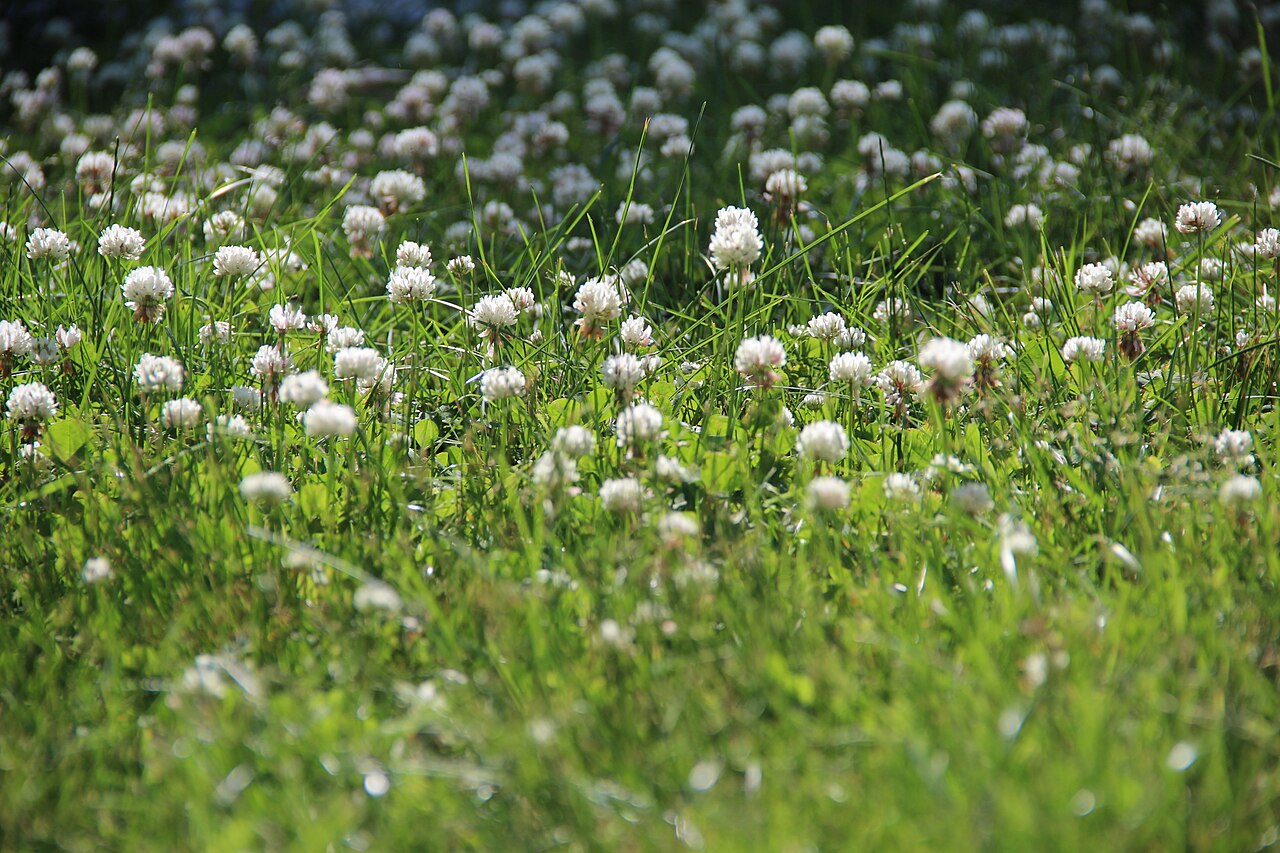
White clover is everywhere in northeast Indiana lawns right now. You have probably noticed those low-growing patches of round, three-part leaves scattered through your grass. Some homeowners wonder if they should worry about it. Others have heard it might actually be good for the lawn. Here is what we see on properties across Fort Wayne and Marion — and what you should know.
What You Are Looking At
The clover in most Indiana lawns is white clover (Trifolium repens). It is a low-growing perennial that spreads by stolons — above-ground runners that creep across the soil and root at each node. It produces small white or pinkish flower heads from late spring through fall.
Here is something most people do not know: clover used to be included in lawn seed mixes on purpose. Until the 1950s, seed blends regularly contained white clover because it stays green and fills in gaps. It was only considered a weed after broadleaf herbicides became popular and killed the clover along with everything else.
What Clover Does in Your Lawn
Clover is a legume. That means it has a relationship with soil bacteria called rhizobia that live in small nodules on the roots. These bacteria convert nitrogen from the air into a form plants can use, so a healthy stand of clover adds a meaningful amount of nitrogen to the surrounding soil over the course of a season.
Clover also stays green during summer dry spells when bluegrass goes dormant. Its deeper root system reaches moisture that grass roots cannot. And the flowers are one of the most important nectar sources for honeybees and native pollinators in the Midwest.
So clover does some real things. But for most homeowners, what it does best is signal a problem.
What Clover Is Telling You
When we pull up to a property in Fort Wayne or Marion and see heavy clover, it tells us something about the lawn underneath. Clover thrives where grass struggles. It moves in when the turf is thin, underfed, or stressed.
That is because clover makes its own nitrogen, so it does not need fertilizer the way grass does. In a lawn that has not been fertilized regularly, the grass gets weaker while the clover gets stronger. Over time, the clover fills in the gaps the grass leaves behind.
A few clover plants scattered through an otherwise thick lawn are not unusual. But when clover starts forming large patches or taking over entire sections, it usually means the turf needs attention — more consistent fertilization, overseeding thin spots, or aeration to break up compacted soil.
Why Most Homeowners Want It Gone
The most common complaint we hear is appearance. Clover leaves are a different shape and shade of green than grass, and the patches create an uneven, spotty look that stands out — especially in the front yard. A lawn that is 20 percent clover simply does not have the clean, uniform appearance most homeowners want.
The flowers are a concern too. White clover blooms attract bees, which is great for the ecosystem but not great for kids playing barefoot in the yard. For families with young children, that alone is often reason enough to want it gone.
Clover also goes dormant in northeast Indiana winters, leaving brown patches where the grass would otherwise look consistent. It fills back in come spring, but for a few weeks those spots look thin and sparse.
And once it gets established, clover spreads fast. Those stolons reach out in every direction, and each node puts down new roots. A small patch this spring can be a big patch by fall if nothing changes.
How We Handle Clover
Clover is a broadleaf plant, which means our broadleaf weed control programs target it the same way they target dandelions, plantain, and other common lawn weeds. The same treatments we apply across Fort Wayne and Marion every spring and fall take care of clover right along with everything else.
Timing matters. Purdue's maintenance calendar for Indiana lawns recommends fall as the best window for broadleaf weed control in cool-season lawns. That is when clover is pulling nutrients down into its roots for winter storage. Treatments applied in fall get transported deeper into the plant for a more complete kill. Our fall programs are scheduled around exactly this window.
Spring treatments can work but sometimes need a follow-up application. When clover is flowering heavily, we time the application carefully to limit pollinator exposure.
But weed control is only part of the answer. The real long-term fix is building thicker, healthier turf that crowds clover out naturally. That means fertilizing on the schedule Purdue recommends, aerating compacted soil, and overseeding thin areas in the fall. When the grass is thick and well-fed, clover simply cannot compete. That is exactly what our lawn care programs are designed to do — address the weeds and build the turf at the same time.
The Bottom Line
Clover in your lawn is not an emergency, but it is a signal. It tells you the turf is thin or underfed, and it will keep spreading until the underlying problem gets fixed.
We handle clover on properties across Fort Wayne and Marion every season. If you are seeing more clover than grass this spring, give us a call at either our Fort Wayne or Marion office. We will take a look and put together a plan that takes care of the clover and builds the lawn back up underneath it.
Sources
- Purdue Extension AY-27-W, "Maintenance Calendar for Indiana Lawns" — PDF