You have probably seen the phrase "certified arborist" on trucks around Fort Wayne and Marion. Maybe someone told you to call one. But what does that actually mean? Is it just a fancy title, or does it represent something real? Here is what the certification means and when it matters for your trees.
What ISA Certification Means
The International Society of Arboriculture (ISA) is the main professional organization for tree care worldwide. Their Certified Arborist credential is not a license you buy. It requires passing a comprehensive exam covering tree biology, soil science, pruning, planting, pest management, risk assessment, and safety.
To qualify for the exam, candidates need at least three years of full-time experience in arboriculture or a combination of education and experience. The exam itself covers topics from Purdue Extension's tree care publications and other research-based sources. It is not easy to pass.
Once certified, arborists must earn continuing education credits every three years to maintain the credential. This means they stay current on new research, pest outbreaks, and best practices. The ISA revokes the certification if the education requirements are not met.
What an Arborist Does (That a Tree Guy Does Not)
Anyone with a chainsaw and a truck can call themselves a "tree service." Indiana does not require a license to cut down trees. That means the person showing up to trim your 80-foot oak might have no formal training at all.
A certified arborist brings a level of knowledge that matters for several reasons:
Diagnosis. When a tree looks sick, an arborist can tell you why. Is it a pest? A disease? A soil problem? Root damage from construction? The diagnosis determines the treatment, and a wrong diagnosis means wasted money and a dying tree. Purdue Extension's diagnostic guides are written for professionals with this level of training.
Proper pruning. There are right ways and wrong ways to prune a tree. Topping (cutting major branches back to stubs) is the most common mistake made by untrained crews. Purdue Extension and the ISA both condemn topping because it destroys the tree's structure, creates weak regrowth, and shortens the tree's life. A certified arborist prunes using techniques that maintain the tree's health and structural integrity.
Risk assessment. Can you tell whether a cracked tree is about to fall or is perfectly stable? Arborists with additional TRAQ (Tree Risk Assessment Qualification) training can evaluate structural defects using standardized methods developed from decades of research. This matters when a tree is near your house, over your driveway, or along a property line.
Treatment planning. Some tree problems can be treated. Emerald ash borer, for example, can be managed with trunk injections if caught early enough. A certified arborist knows which treatments are supported by research and which are a waste of money.
When You Need a Certified Arborist
A tree looks sick and you do not know why. Yellow leaves, thinning canopy, early fall color, and dieback are all symptoms that need professional diagnosis. Purdue Extension's tree problem diagnostic resources can help you narrow down possibilities, but an on-site assessment is often necessary.
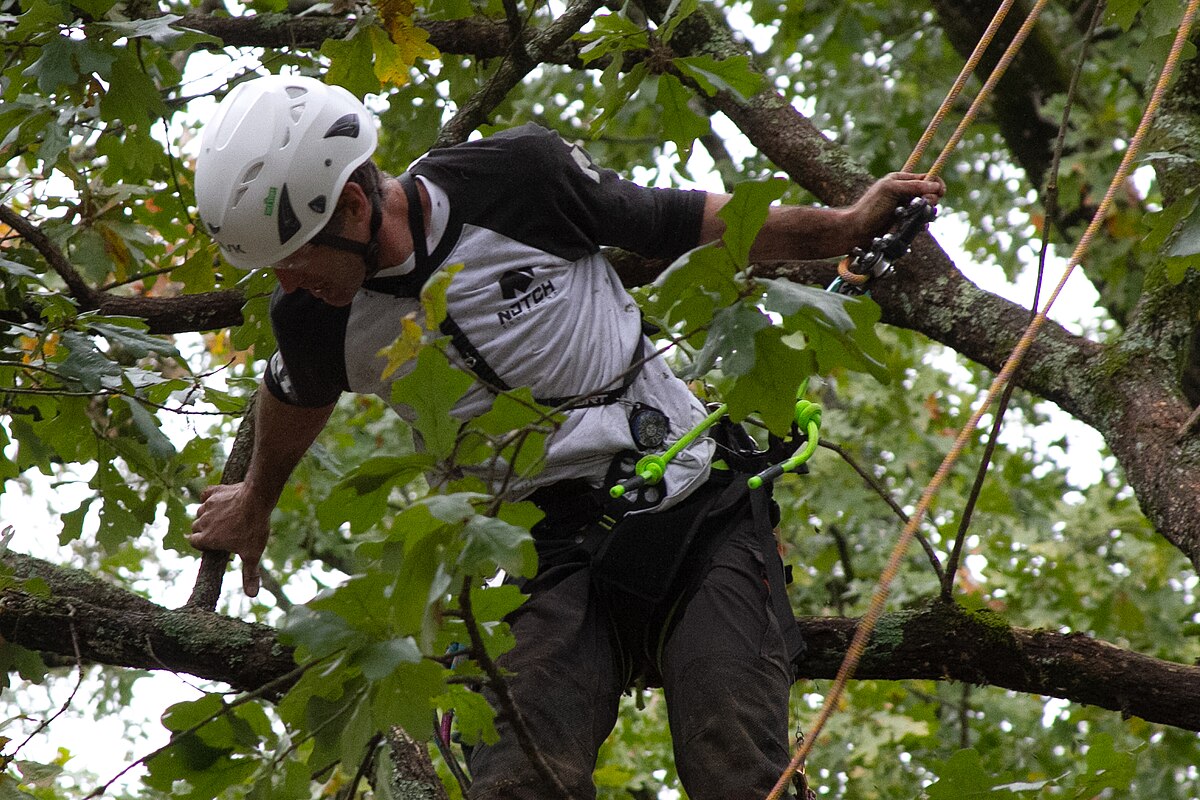
You need large branches removed. Any pruning that requires climbing, rigging, or a chainsaw above ground level should be done by a trained professional with proper equipment and insurance. This is some of the most dangerous work in any industry.
A tree is near a structure or power line. Removing or pruning trees near houses, garages, and utility lines requires planning and skill to avoid damage. Professional arborists carry liability insurance for a reason.
You are planting a new tree. An arborist can help you choose the right species for your location, soil, and space. This prevents expensive problems down the road. Purdue Extension's planting guides (FNR-FAQ-9) emphasize that species selection is the most important decision in tree planting.
Storm damage. After a storm, it can be hard to tell whether a damaged tree is safe. An arborist can assess the remaining structure and recommend whether to repair, prune, or remove.
You are buying or selling a home. Large trees add significant value to a property, but hazardous trees are a liability. An arborist assessment can be part of your due diligence.
How to Find One
The ISA maintains a searchable directory of certified arborists at treesaregood.org. You can search by zip code to find credentialed professionals in the Fort Wayne and Marion areas.
When you call, ask for their ISA credential number. You can verify it on the ISA website. Also ask about insurance. A reputable arborist carries both liability insurance and workers' compensation. Ask for certificates, not just a verbal promise.
Be cautious of anyone who offers to top your trees, cannot provide proof of insurance, or shows up uninvited after a storm offering cheap work. These are red flags that Purdue Extension and the ISA both warn about.
What It Costs
Arborist consultations for a single tree or small property typically run between $75 and $200 in northeast Indiana. This gets you an on-site assessment, diagnosis, and written recommendations. The consultation fee is separate from any work that might follow.
It might feel like a lot to pay someone just to look at a tree. But consider this: removing a large tree costs $1,000 to $3,000 or more. If an arborist can diagnose a treatable problem for $150 and save a tree that would cost $2,000 to remove, the math works out quickly.