When the snow finally melts across Fort Wayne and Marion, most homeowners are itching to get outside. But before you fire up the mower or spread fertilizer, there is one step that sets the tone for your entire lawn season: spring cleanup. And it matters a lot more than most people realize.
What Winter Leaves Behind
Indiana winters are rough on lawns. By the time March rolls around, your yard has been buried under snow, soaked by freeze-thaw cycles, and pelted by wind-blown debris for months. What you see when the snow melts is not pretty.
Matted leaves, broken twigs, and dead grass blades pile up into a soggy blanket that smothers your turf. Purdue Extension warns that this debris layer blocks sunlight and traps moisture against the grass, creating the perfect environment for disease. Their Maintenance Calendar for Indiana Lawns (AY-27-W) specifically calls out watching for snow mold under matted leaves as snow recedes.
Snow mold shows up as circular gray or pinkish patches where the grass looks matted and slimy. Purdue's disease profiles (BP-101-W and BP-102-W) describe two types: gray snow mold and pink snow mold. Both thrive under wet, matted debris. The fix is simple: rake those areas to break up the crust and let the turf dry out.
Step 1: Walk Your Lawn First
Before you grab any tools, take a slow walk around your entire yard. This is your first-look assessment, and it is the most important five minutes you will spend on your lawn all spring.
Here is what you are looking for:
Bare spots and thin areas. Winter kills grass in weak spots. Mark them mentally so you can seed them later.
Snow mold patches. Those gray or pink matted circles we just talked about. Rake them now.
Vole trails. Voles tunnel through the grass under snow cover, leaving narrow paths of dead grass. Michigan State Extension notes that vole damage is common after snowy winters and usually recovers on its own once the turf starts growing.
Standing water or soggy spots. These point to drainage problems or compacted soil that may need attention later.
Frost heaving. Bumpy spots where the ground froze and pushed up. As we covered in our lawn rolling article, most frost heaving settles on its own. Do not roll it.
Ohio State Extension recommends this kind of spring assessment as the first step in any lawn care season.
Step 2: Clear the Debris
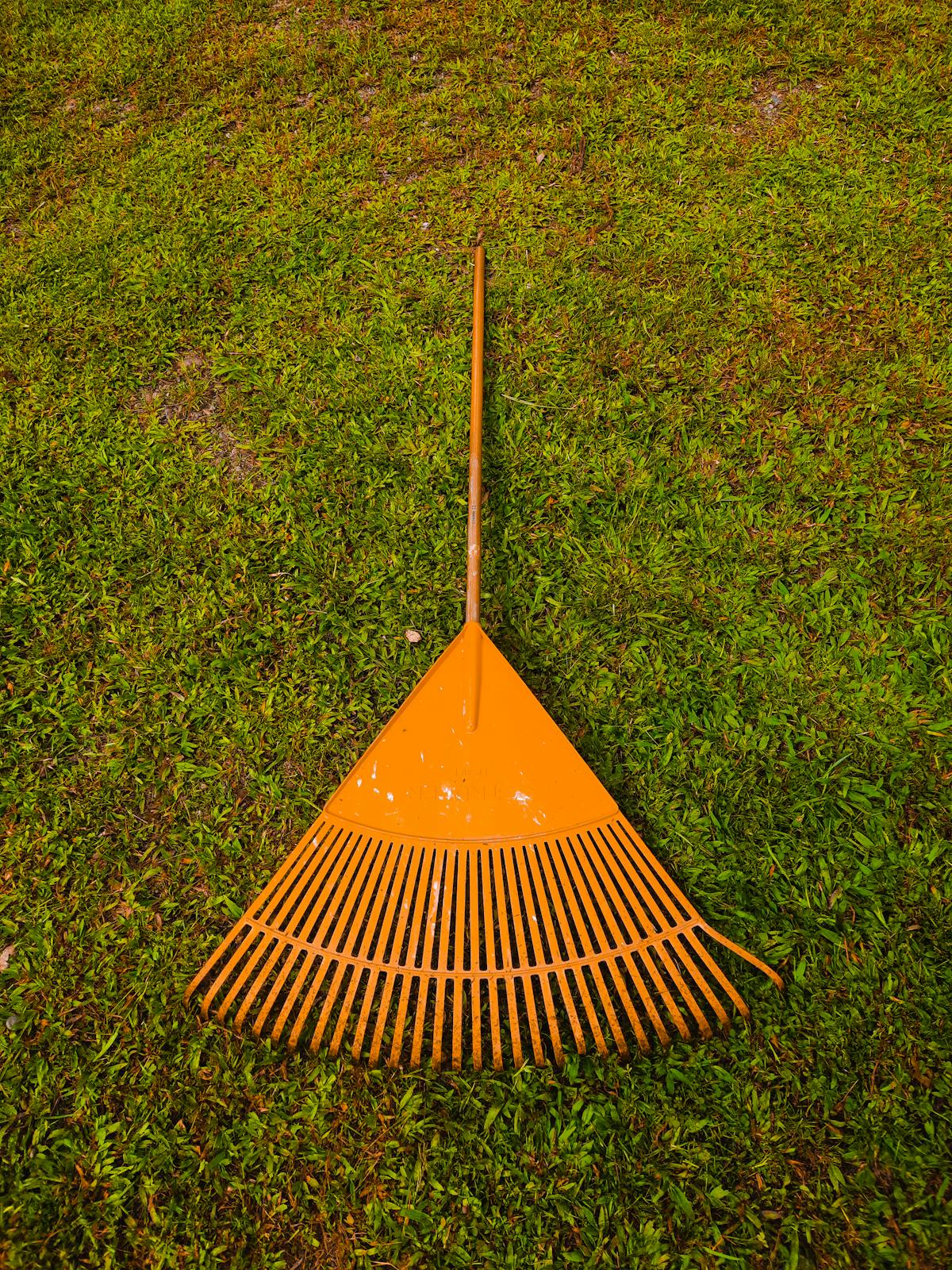
Once you have walked the lawn, it is time to clean it up. Grab a leaf rake, not a garden rake. A leaf rake is flexible enough to lift debris without tearing up the turf underneath.
Clear out everything that does not belong: leftover leaves, sticks, pine needles, trash, and any other junk that blew in over winter. Pay extra attention to corners, fence lines, and areas under trees where debris piles up thickest.
Michigan State Extension recommends light raking with a leaf rake in early spring to remove dead, blighted leaf blades and promote recovery as temperatures warm. Focus on the worst areas rather than attacking the entire lawn aggressively. Your grass is still waking up and does not need harsh treatment right now.
One thing to keep in mind: Michigan State also advises working slowly and using manual methods when possible. Many beneficial insects overwinter in leaf litter, and gentle cleanup gives them a chance to emerge before you clear everything away.
Step 3: Check Your Thatch
While you are raking, take a close look at the layer between the green grass blades and the soil surface. That spongy layer of dead roots, stems, and organic matter is called thatch.
A thin layer of thatch (under half an inch) is actually good. It insulates roots, holds moisture, and cushions foot traffic. But when thatch builds up past half an inch, it becomes a problem. Purdue Extension's guide on dethatching (AY-8-W) explains that thick thatch blocks water, air, and fertilizer from reaching the roots. It also harbors insects and disease.
To check, push your finger down through the grass to the soil. If you feel more than a half-inch of spongy material before you hit dirt, your lawn has a thatch problem.
Here is the important part: spring is not the best time to dethatch. Purdue and Iowa State Extension both say September is the ideal time for dethatching cool-season grasses like Kentucky bluegrass. Dethatching in spring tears up the lawn right when it is trying to recover, and it opens up bare soil for crabgrass and other weeds to invade.
If your thatch is severe, more than an inch, note it now and plan for fall — that is exactly what our core aeration is for. For now, just know it is there.
Step 4: That First Mow
Purdue's maintenance calendar says to begin mowing as soon as the lawn greens up and starts growing, usually sometime in April for most of northeast Indiana. Set your mower height to 2.5 to 3 inches for the first cut.
That first mow does more than just cut grass. It cleans up dead blade tips, evens out the lawn's appearance, and gets air circulating at the turf surface. Think of it as the final step of spring cleanup.
Make sure your mower blade is sharp. As we covered in our mowing mistakes article, a dull blade tears the grass and opens the door to disease. Purdue recommends sharpening your blade four to six times per year.
What NOT to Do in Spring Cleanup
Spring enthusiasm is great, but it leads to some common mistakes:
Do not fertilize too early. Purdue's calendar recommends waiting until the lawn is actively growing and you have mowed it two or three times before applying fertilizer. Fertilizing too early pushes top growth before the roots are ready.
Do not dethatch aggressively. As we covered above, save heavy dethatching for fall. A light raking is all you need right now.
Do not work on saturated soil. Michigan State warns that working on wet, soft ground causes compaction. If your shoes sink in, wait a few more days for the soil to firm up.
Do not roll your lawn. We covered this in detail already, but it bears repeating: Purdue and Michigan State both say rolling compacts soil and does more harm than good.
Why All This Matters
Spring cleanup is not glamorous work. Nobody posts pictures of themselves raking dead leaves off a muddy lawn. But every turf scientist we have read agrees: the lawns that look best in July are the ones that got proper attention in March and April.
Clearing debris lets sunlight reach the grass. Raking snow mold patches lets them dry and recover. Checking thatch tells you what your lawn needs later in the year. And that first walkthrough gives you a game plan for the whole season.
Skip this step and you are playing catch-up all summer. Do it right and everything else, from fertilizing to weed control to mowing, works better because your lawn started the season healthy.
Sources
- Purdue Extension AY-27-W, "Maintenance Calendar for Indiana Lawns"
- Purdue Extension AY-8-W, "Mowing, Dethatching, Aerifying"
- Purdue Extension BP-101-W, "Gray Snow Mold"
- Purdue Extension BP-102-W, "Pink Snow Mold"
- Purdue Extension HO-236-W, "Taking Care of Your Yard"
- Michigan State Extension, "When Is It Safe to Clean Up My Yard This Spring?"
- Michigan State Extension, "Spring Lawn Care Tips"
- Ohio State Extension, "Spring Lawn Care"
- Iowa State Extension, "Yard and Garden: Thatch and Fall Removal"