
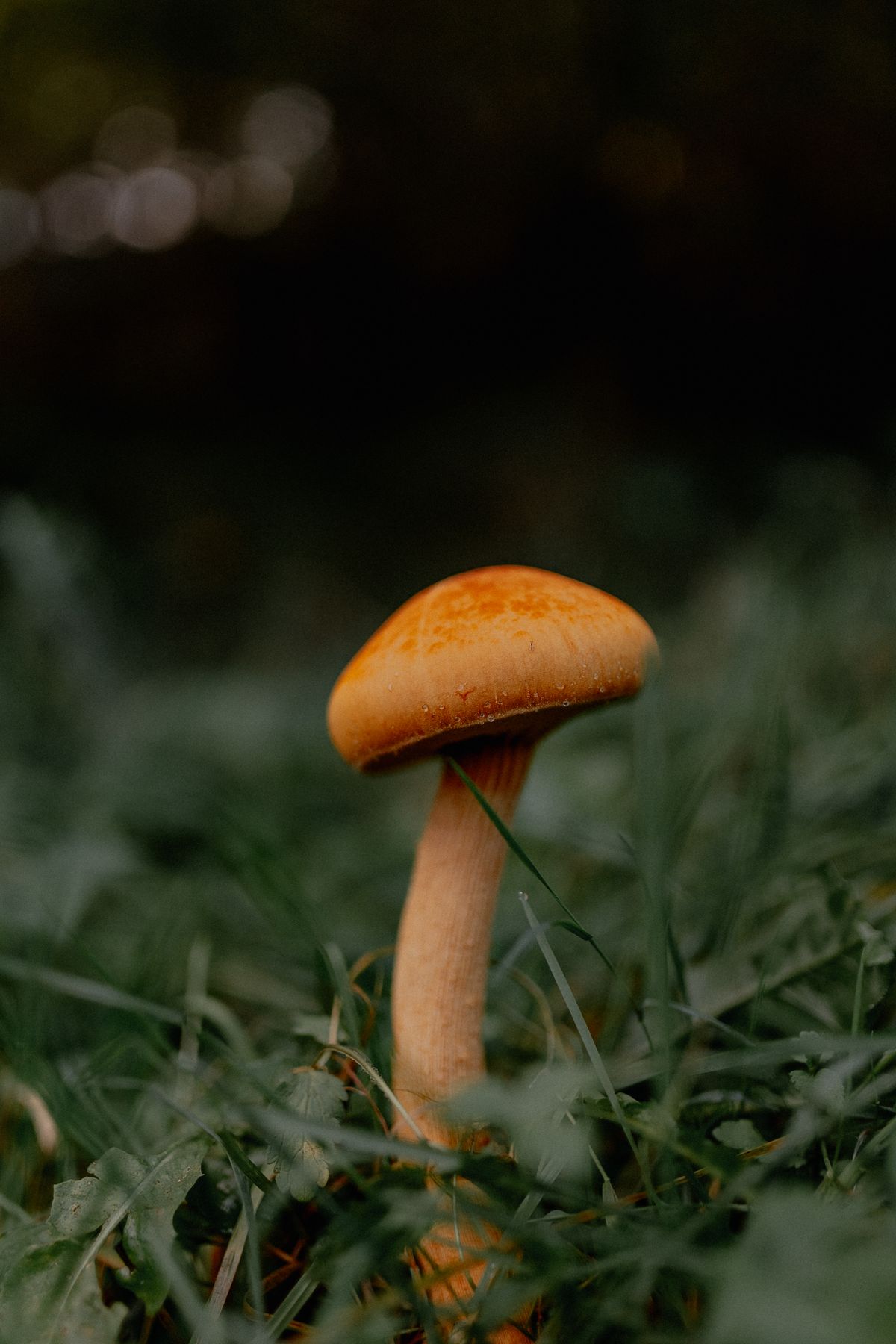
After a few warm, rainy days in June, homeowners across Fort Wayne and Marion wake up to find mushrooms sprouting all over their lawn. Some pop up in clusters. Others appear in strange circles. It can look alarming, but most of the time mushrooms are not hurting your grass at all. The real question is knowing when they signal something deeper going on underground.
What Mushrooms in Your Lawn Actually Are
The mushrooms you see above the surface are just the tip of the iceberg. They are the fruiting bodies of fungi that live in the soil, feeding on decaying organic matter like dead tree roots, buried wood, old stumps, or thick thatch. The main body of the fungus — a network of thread-like cells called mycelium — lives underground where you cannot see it.
Michigan State Extension describes lawn mushrooms as saprophytes, meaning they feed on dead material rather than living plants. They are decomposers. They break down organic debris in the soil and return nutrients to the ground. In that sense, they are doing useful work.
When conditions are right — warm temperatures, plenty of moisture, and a food source underground — the fungus sends up mushrooms to spread its spores. That is exactly why they seem to appear overnight after a summer rain here in northeast Indiana.
Why They Show Up Where They Do
Mushrooms are not random. They pop up wherever the fungi have something to eat. Common spots include:
Where a tree used to be. If a tree was removed from your yard years ago, the roots and stump left underground are slowly decomposing. Fungi move in to break down that wood, and mushrooms appear above the surface for years afterward.
Areas with thick thatch. A thatch layer thicker than half an inch gives fungi a ready food source right at the surface. Iowa State Extension points out that heavy thatch is one of the most common reasons mushrooms keep coming back in the same spots.
Low spots and poorly drained areas. Fungi love moisture. If part of your yard stays wet longer than the rest after a rain, that area is more likely to produce mushrooms. Poor drainage keeps the soil damp enough for fungal activity to thrive.
Buried construction debris. Old lumber, tree stumps, or organic material buried during construction can feed fungi for a decade or more. This is surprisingly common in newer subdivisions around Fort Wayne and Marion.
Most Lawn Mushrooms Are Harmless
This is the good news. The vast majority of mushrooms that pop up in residential lawns are not harming your grass. The University of Minnesota Extension makes this point clearly: common lawn mushrooms are feeding on dead material in the soil, not attacking your living turf. Your grass is not their food source.
If mushrooms bother you, you can simply knock them over with a rake or mow over them. They will break apart and disappear. They will likely come back after the next rain, but they are not causing damage while they are there.
That said, there is one important safety note. Some mushrooms that grow in lawns are toxic if eaten. Young children and pets are the biggest concern. Purdue's Plant and Pest Diagnostic Lab recommends removing mushrooms promptly if small children or pets use the yard, and never eating any mushroom you find growing in your lawn. Identification is extremely difficult, and the consequences of a mistake are serious.
When Mushrooms Mean Trouble: Fairy Rings
There is one situation where mushrooms in your lawn point to a real turf problem, and that is fairy rings. Fairy rings are circles or arcs of mushrooms, dark green grass, or dead turf that expand outward across your lawn over time.
Purdue Extension's turfgrass disease profile (BP-113-W) explains that fairy rings are caused by more than 60 species of soil-dwelling fungi. These fungi grow outward through the soil in a radial pattern, which is what creates the ring shape. As the colony expands, it can alter the soil in ways that directly affect your grass.
Purdue classifies fairy rings into three types:
Type I — the one that kills grass. The fungal growth makes the soil hydrophobic, meaning it repels water. The turf inside or along the ring cannot absorb moisture no matter how much you water. The grass turns brown and dies in a band that follows the ring. This type causes real, visible damage.
Type II — dark green rings. The fungi release nitrogen as they break down organic matter, which stimulates the grass above them. You see a ring or arc of dark green, fast-growing turf. It is not killing anything, but the uneven color is noticeable.
Type III — mushroom rings only. A circle of mushrooms appears with no change to the grass underneath. This is the least concerning type, though it can still be unsightly.
The challenging thing about fairy rings is that no fungicide is consistently effective against them. Purdue, Michigan State, and Ohio State Extension all agree on this point. The fungi live deep in the soil and thatch layer, and surface-applied products do not reach them reliably. Management focuses on addressing the conditions that support the fungi rather than trying to kill them directly.
What Actually Helps
Since you cannot spray mushrooms away, the practical approach is managing the conditions that encourage them.
Reduce thatch with core aeration. Thick thatch is both a food source and a habitat for the fungi that produce mushrooms and fairy rings. Core aeration physically removes plugs of soil and thatch, breaking up that layer and helping it decompose naturally. We include aeration in our fall lawn care program because it addresses multiple problems at once — compaction, thatch buildup, and the fungal habitat that comes with it.
Improve drainage. If mushrooms keep appearing in the same low spot, the underlying issue is often poor drainage that keeps the soil too wet. Redirecting downspouts, regrading low areas, or addressing compacted soil with aeration can all help reduce excess moisture.
Remove the food source when possible. If mushrooms are clustered around an old stump, removing the stump and as many roots as possible eliminates what the fungi are feeding on. For buried debris, this is harder, but the mushrooms will eventually stop once the material is fully decomposed.
For Type I fairy rings, Purdue suggests deep watering with a wetting agent to help water penetrate the hydrophobic soil. Aerating directly through the ring can also help break up the fungal mat. This is not a quick fix — it takes repeated effort over a season or more. Our team can assess whether a fairy ring is causing actual turf damage or just creating a cosmetic issue, and recommend the right approach for your yard.
When to Call Us
A few mushrooms after a rain? That is normal. But there are signs that something more is going on:
Dead grass in a ring or arc pattern — this is likely a Type I fairy ring, and the turf damage will keep spreading if the underlying soil condition is not addressed.
Mushrooms in the same spot year after year — persistent fungal activity can indicate a thick thatch problem or buried organic matter that needs attention.
Large areas of mushroom growth combined with thin or declining turf — when mushrooms appear alongside other lawn problems, the underlying causes often overlap. Compaction, poor drainage, and excess thatch create conditions that favor both fungal growth and weak grass.
Our lawn disease program includes diagnosing fungal issues on properties across Fort Wayne and Marion. We see fairy rings and persistent mushroom problems regularly, and we know the difference between a cosmetic nuisance and a condition that is actively damaging your turf.
Mushrooms, Rings, or Patches You Can't Explain?
Our team diagnoses lawn fungal issues across Fort Wayne and Marion. If something in your lawn does not look right, call either office and we will take a look.
Fort Wayne: 260-432-8900 | Marion: 765-660-8873
Sources
- Purdue Extension BP-113-W, "Turfgrass Disease Profiles: Fairy Ring" (Richard Latin)
- Purdue Plant and Pest Diagnostic Lab, "Mushrooms in Lawns" (Gail Ruhl, 2022)
- Michigan State Extension, "Fungi in Lawns Getting Interesting"
- Iowa State Extension, "How Do I Get Rid of Mushrooms in My Yard or Garden Bed?"
- University of Minnesota Extension, "Mushrooms in Lawns"
- Ohio State BYGL, "Fairy Rings"