If you have an ash tree in your yard in Fort Wayne or Marion, there is a small green beetle you need to know about. The emerald ash borer has already killed hundreds of millions of ash trees across the Midwest. It is here in northeast Indiana, and left untreated, it will kill every ash tree it finds.
What Is the Emerald Ash Borer?
The emerald ash borer (Agrilus planipennis) is an invasive beetle from eastern Asia. It was first found near Detroit in 2002, likely arriving in wood packing material shipped from overseas. Since then, it has spread to more than 35 states, including Indiana.
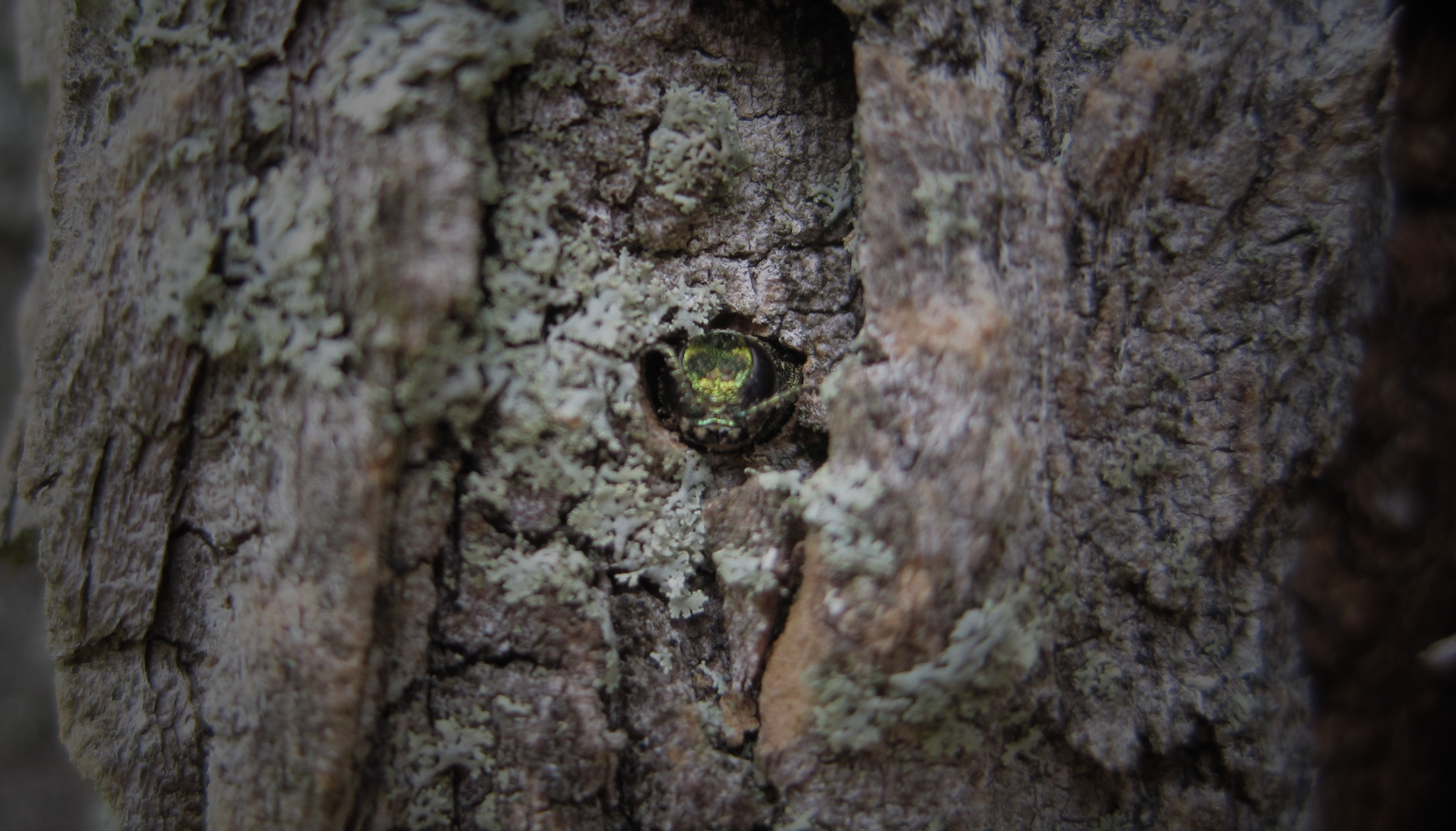
The adult beetle is small — about half an inch long — with a bright metallic green body. But the adults are not the real problem. It is the larvae that do the damage. Female beetles lay eggs in the crevices of ash bark. When the larvae hatch, they burrow under the bark and feed on the inner wood, carving winding tunnels called galleries. Those galleries cut off the flow of water and nutrients through the tree.
According to Purdue Entomology's EAB research, a healthy ash tree can survive a year or two of light feeding. But as the beetle population builds, the damage adds up fast. Most untreated ash trees die within three to five years of the first signs of infestation.
Do You Have an Ash Tree?
Before you can worry about emerald ash borer, you need to know whether you actually have an ash tree. Ash trees are common in yards, parks, and along streets across Fort Wayne and Marion. Here is how to tell.
Look at the leaves. Ash trees have compound leaves, meaning each leaf is made up of several smaller leaflets attached to a central stem. Most ash species have five to nine leaflets per leaf. Each leaflet is oval with a pointed tip and fine-toothed edges.
Check the branching pattern. This is the key test. Ash trees have opposite branching — the branches and buds grow in pairs directly across from each other on the twig. Most trees have alternate branching, where branches stagger along the twig. Michigan State Extension's ash identification guide (E-2942) notes that the only other common tree with both opposite branching and compound leaves is boxelder, which usually has just three to five leaflets.
Look at the bark. On mature ash trees, the bark forms a distinctive diamond-shaped ridge pattern. Young ash trees have smoother bark, sometimes with a slight orange tint.
If you are not sure what you are looking at, our arborists can identify the trees on your property during a site visit. We do this for homeowners across Fort Wayne and Marion every week.
Signs Your Ash Tree May Be Infested
Emerald ash borer larvae feed out of sight, under the bark. By the time you notice obvious damage, the beetles have usually been at work for a year or more. Here is what to watch for.
Thinning at the top of the canopy. This is often the first visible sign. The upper branches start losing leaves and dying back because the larvae have disrupted nutrient flow. Ohio State's entomology factsheet (ENT-77) describes this crown dieback as one of the earliest symptoms homeowners notice.
D-shaped exit holes. When adult beetles emerge from the tree in late spring and early summer, they chew their way out through the bark, leaving small D-shaped holes about one-eighth of an inch across. These holes are a telltale sign of emerald ash borer — native borers leave round holes, not D-shaped ones.
Bark splitting and blonding. As larvae tunnel beneath the bark, the bark above those galleries can crack and split. When pieces fall away, they expose the lighter wood underneath. Arborists call this "blonding" because the trunk starts to look pale and patchy.
Sprouting from the trunk. Stressed trees sometimes send out clusters of new shoots from the lower trunk or base. These epicormic sprouts are the tree's last-ditch effort to produce leaves when the upper canopy is failing.
Woodpecker activity. Woodpeckers love emerald ash borer larvae. If you suddenly notice a lot of woodpecker holes and flaking bark on your ash tree, the birds may be telling you something. Purdue's EAB resources note that heavy woodpecker feeding is often one of the first clues.
Why Timing Matters So Much
Here is the hard truth about emerald ash borer: once a tree has lost too much of its canopy, treatment cannot save it. Purdue Extension's EAB decision guide is clear on this. If more than 30 percent of the canopy is gone, the tree is unlikely to recover even with treatment. At that point, removal is the only safe option, because dead ash trees become brittle and dangerous.
That is why early action matters. The best time to treat an ash tree is before you see any signs of infestation at all — or at the first hint of canopy thinning. Waiting until the damage is obvious often means waiting too long.
Right now, in June, adult emerald ash borers are actively emerging from ash trees across northeast Indiana. If you have ash trees on your property and they are not on a treatment program, this is the time to act.
How Professional Treatment Works
The most effective treatment for emerald ash borer is a trunk injection performed by a trained arborist. Research from Michigan State University found that a single trunk injection of emamectin benzoate provided complete control of EAB larvae for two to three years. In their studies, 98 out of 99 treated trees showed no surviving larvae after treatment.
Trunk injection works by delivering the treatment directly into the tree's vascular system, where it moves up through the canopy and into the leaves. When larvae feed on treated wood, they die. The treatment also kills adult beetles that feed on the leaves.
Our team performs emerald ash borer trunk injections across Fort Wayne and Marion. Our arborists assess the tree first to make sure it is healthy enough to benefit from treatment, then handle the injection on a schedule that keeps the tree protected year after year.
Purdue's EAB management page recommends that homeowners with ash trees larger than about 15 inches in diameter work with a professional for treatment. Larger trees need precise dosing and injection techniques that require specialized equipment.
Treatment Costs Less Than You Think
One of the most common questions we hear is whether it is worth treating an ash tree or just cutting it down. Purdue Extension's research answers that clearly: for most large ash trees, treatment is significantly cheaper than removal.
Removing a large ash tree can cost well over a thousand dollars when you factor in the cut, stump grinding, and cleanup. A mature shade tree also adds real value to your property — studies estimate that large trees can increase home value by thousands of dollars. Treatment to protect that tree runs a fraction of the removal cost and keeps your shade, your property value, and your tree.
And because the most effective trunk injections last two to three years between treatments, the ongoing cost stays low. Compare that to the one-time expense of losing a 60-foot ash tree and starting over with a sapling.
What If You Wait?
Emerald ash borer will not go away on its own. Purdue and every other Midwestern land-grant university agree: untreated ash trees will die. USDA APHIS estimates that EAB has killed hundreds of millions of ash trees in North America since 2002, and the beetle continues to spread.
Dead ash trees are not just an eyesore. They become a safety hazard. Ash wood gets brittle quickly after the tree dies, and branches — or entire trees — can fall without warning. We see this on properties across Fort Wayne and Marion, and it is always more expensive and more dangerous to deal with a dead tree than a live one.
If you have an ash tree, the smartest move is to get it assessed now. Our arborist can tell you whether your tree is a good candidate for treatment and get it on a protection program before the damage starts.
Worried About Your Ash Trees?
Our arborists assess and treat ash trees for emerald ash borer across Fort Wayne and Marion. Call either office to set up a site visit.
Fort Wayne: 260-432-8900 | Marion: 765-660-8873
Sources
- Purdue Entomology, "Emerald Ash Borer Management"
- Purdue Landscape Report, "New Tips for Managing Emerald Ash Borer"
- Purdue FNR Extension, "What to Do About Emerald Ash Borer"
- Michigan State Extension, "Trunk Injections of Imidacloprid or Emamectin Benzoate for Emerald Ash Borer"
- Ohio State Extension ENT-77, "Distinguishing Emerald Ash Borer from Native Borers"
- Michigan State Extension E-2942, "Ash Tree Identification"
- USDA APHIS, "Emerald Ash Borer"