Not every weed in your lawn is a dandelion. Some weeds are grasses. And grassy weeds are sneaky. They look a lot like your real lawn — just a little too coarse, too light, or too clumpy.
We hear the same question all season across Fort Wayne and Marion. “What is that patch of grass that doesn’t match the rest of my yard?” Good news: you can usually figure it out yourself. You just have to look at the right clues, in the right order. That is how our team does it. The science behind it comes from Purdue Extension and other Midwestern universities.
The fastest way to start is the tool right below. Answer a few questions about what you see, and it will point you to the most likely weed. Want to understand the clues it asks about — collar, ligule, vernation, and the rest? The steps under the tool explain every part in plain words, with pictures.
Find Your Weed: A Quick Check
Go by shape and the way it grows — not color. Pick the choice that fits best at each step. You can go back or start over anytime.
This quick check works best with JavaScript on. No problem either way — the same steps are written out below.
First, a Warning About Color
Before you start, know this. Do not trust color alone.
A photo on your phone can look very different from the real plant. Screens, sunlight, and ink all change how green a grass looks. The clues that really name a grass are its shape and the way it grows. Not just how green it is. So in every step below, we look at parts you can touch. We do not go by color.
Step 1: Look at the Time of Year
In Indiana, the calendar is your best first clue. That is because lawn grasses come in two big groups.
Cool-season grasses love spring and fall. They grow fast and turn green early. Most Indiana lawns are cool-season grasses. Kentucky bluegrass and ryegrass are two of them.
Warm-season grasses wake up later. They stay brown and sleepy until the soil gets hot. Then they take off in summer.
Here is the trick. On a cool spring day, a big, lush, fast-growing clump is almost always a cool-season grass that lives for many years. At that same time, warm-season grasses are still tiny, still brown, or not even up yet.
Purdue Extension gives us clear timing for the most common warm-season weed: crabgrass. Crabgrass is a summer annual. That means it grows from seed, lives one year, and dies in fall. Purdue says crabgrass starts to sprout when the soil near the top stays about 55 to 60 degrees for several days. In Indiana, that is usually mid-to-late spring. The big wave comes a bit later, once the soil warms up more. Goosegrass is another summer annual. It sprouts even later than crabgrass.
Nimblewill is different. It is a warm-season grass that lives for years. Purdue says nimblewill turns brown at the first frost. It is very slow to turn green again in spring. So if you see a tan patch sitting in an otherwise green spring lawn, it may well be nimblewill.
How to use this step: A lush green clump in April or May points to a cool-season grass. Tiny seedlings, or a brown patch that greens up only in summer, point to a warm-season grass.
Step 2: Pull a Plant and See How It Grows
Now look at how the plant spreads. This is called its growth habit. It is one of your strongest clues.
First, two quick words. The crown is the base of the plant, right at the soil line. It is where the leaves meet the roots. A tiller is a new shoot that grows up from that crown.
There are three main growth habits. The diagram below shows all three.
- Bunch-type — The plant grows in a clump from one crown, with no runners. Pull it, and the whole thing comes up as one tuft. (Tall fescue, orchardgrass, and foxtail grow this way.)
- Stolons — A stolon is a runner that grows on top of the soil. It creeps across the ground and puts down roots where it touches. (Nimblewill and roughstalk bluegrass spread by stolons.)
- Rhizomes — A rhizome is a runner that grows under the soil. It is a white stem below ground that sends up new plants nearby. These are the hardest to remove. (Quackgrass spreads by rhizomes. Tall fescue sometimes has short ones.)
How to check it yourself: Water the spot well first, or wait until after a good rain so the soil is soft. Then dig up one plant with a hand trowel — soil and all. Shake off the dirt. Look at the base. Does it come up as one neat clump? Do you see runners creeping across the top? Or white stems traveling under the soil? That answer tells you a lot.
Step 3: Check the Small Parts Where the Leaf Meets the Stem
This is where the pros really nail it. The spot where the flat leaf bends away from the stem is called the collar. A few tiny parts live there. They are the most trusty clues of all. Grab a plant and look close. A phone-camera zoom or a cheap magnifier helps a lot.
Here is what those parts look like.
Vernation: is the new leaf rolled or folded?
Vernation just means how the newest leaf is wrapped up before it opens. To check, find the youngest leaf in the center. Roll it between your fingers. If it feels round, it is rolled. If it feels flat with a crease down the middle, it is folded.
Ligule: the little flap at the collar
A ligule is a thin, papery flap at the collar. Sometimes it is a row of tiny hairs instead. To see it, gently bend the leaf back from the stem and look in the bend. A tall, papery ligule points to orchardgrass. A short flap shows up on many grasses. A fringe of tiny hairs, instead of a flap, is a clue for crabgrass and foxtail.
Auricles: tiny claws that hug the stem
Auricles are little claws at the collar that wrap around the stem. Most lawn grasses do not have them. So if you see two small claws hugging the stem, that is the big giveaway for quackgrass.
Sheath: the sleeve around the stem
The sheath is the lower part of the leaf. It wraps the stem like a shirt sleeve, just below the collar. Pinch it and feel its shape. Purdue says goosegrass has a flat sheath that is white to silver at the base. That is a strong clue. Orchardgrass has a flat sheath too.
Leaf width and feel help as well. Very coarse, wide, dark-green blades point to tall fescue. Blue-green, folded blades in a flat clump point to orchardgrass. Fine, light-green blades with a shiny underside, spreading into round patches, point to roughstalk bluegrass.
Step 4: Put It All Together
Now walk the clues in order. Here is a simple path to a likely answer.
- Is it up and lush on a cool spring day? If yes, it is a cool-season grass that lives for years. Go to step 2. If it is a tiny seedling, or a brown patch that greens up only in summer, it is a warm-season grass. Jump to step 4.
- Pull it and look at the collar. Two little claws hugging the stem (auricles), plus white runners under the soil? That is quackgrass.
- No claws, and it grows in a clump from one crown? Very wide, coarse, dark blades with a rolled new leaf means tall fescue. Blue-green, folded blades with a tall papery ligule in a flat clump means orchardgrass. Fine, light-green blades with a shiny underside, creeping into round patches on top of the soil, means roughstalk bluegrass.
- Warm-season grass? A brown patch that greens up very late and creeps on top of the soil is nimblewill. A small, sprawling summer seedling with a rolled leaf is crabgrass. A tough, flat mat with folded leaves and a white-silver base is goosegrass. An upright plant with a hairy ligule and a fuzzy seed head shaped like a fox’s tail is foxtail.
What These Weeds Look Like
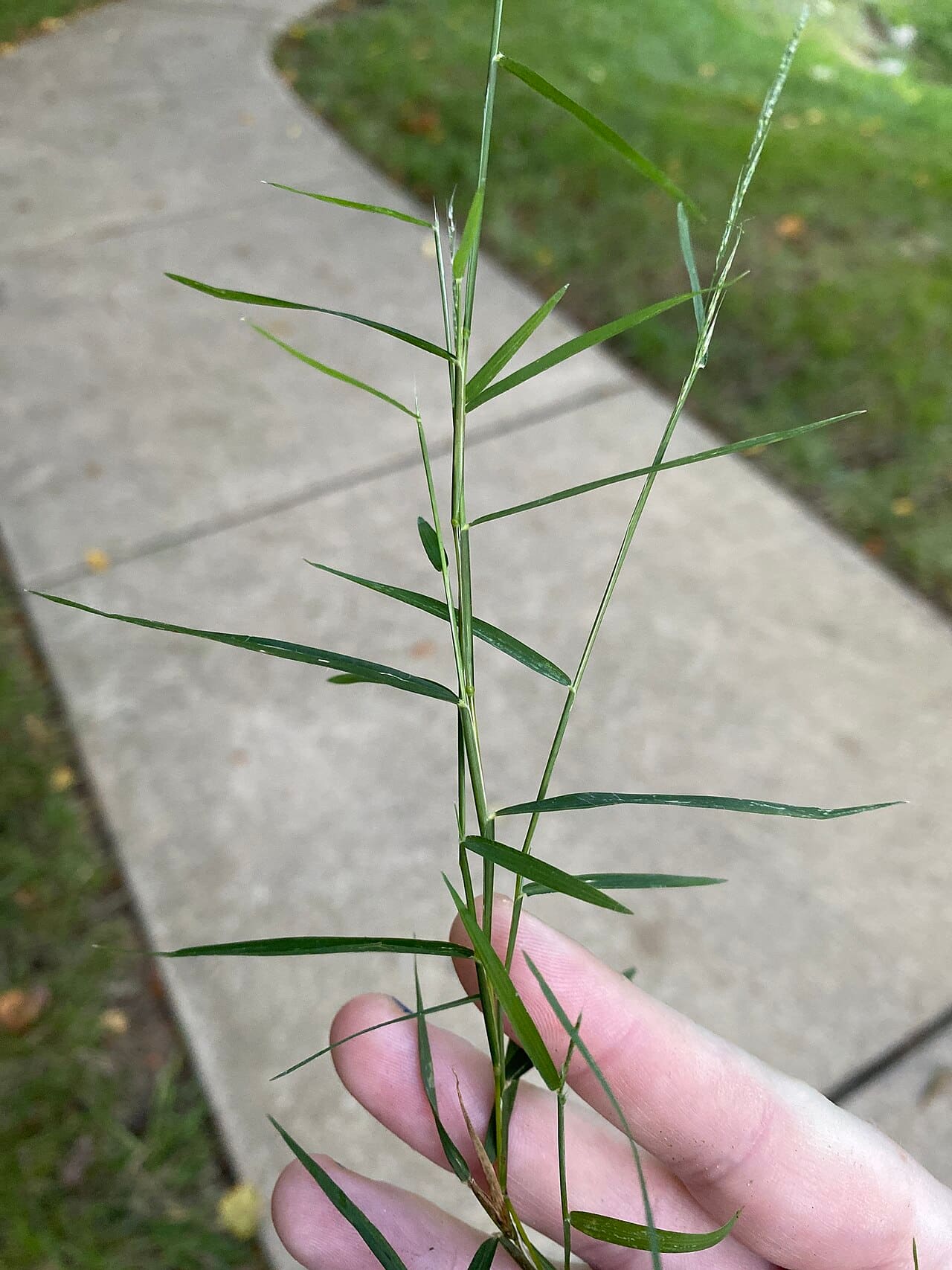
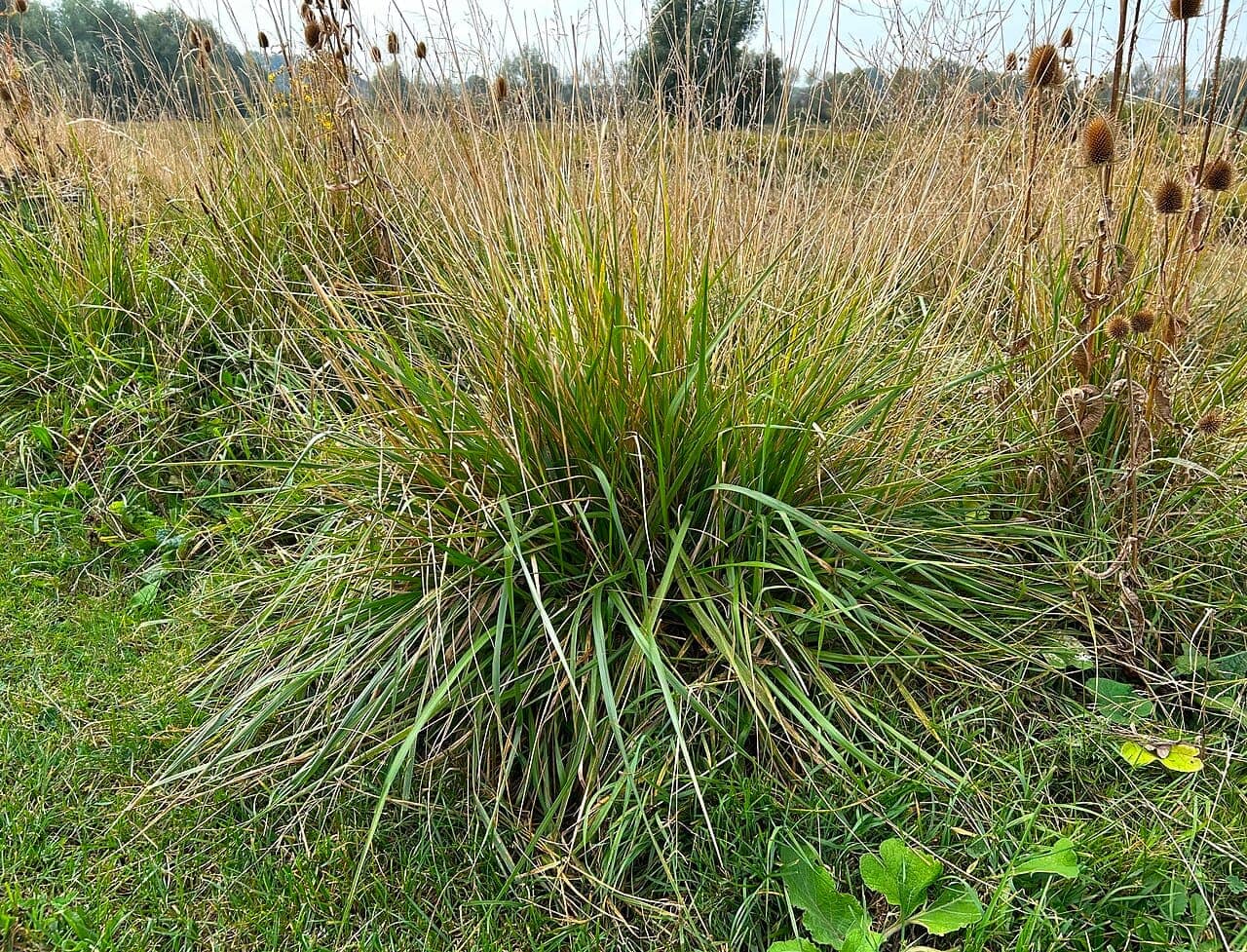
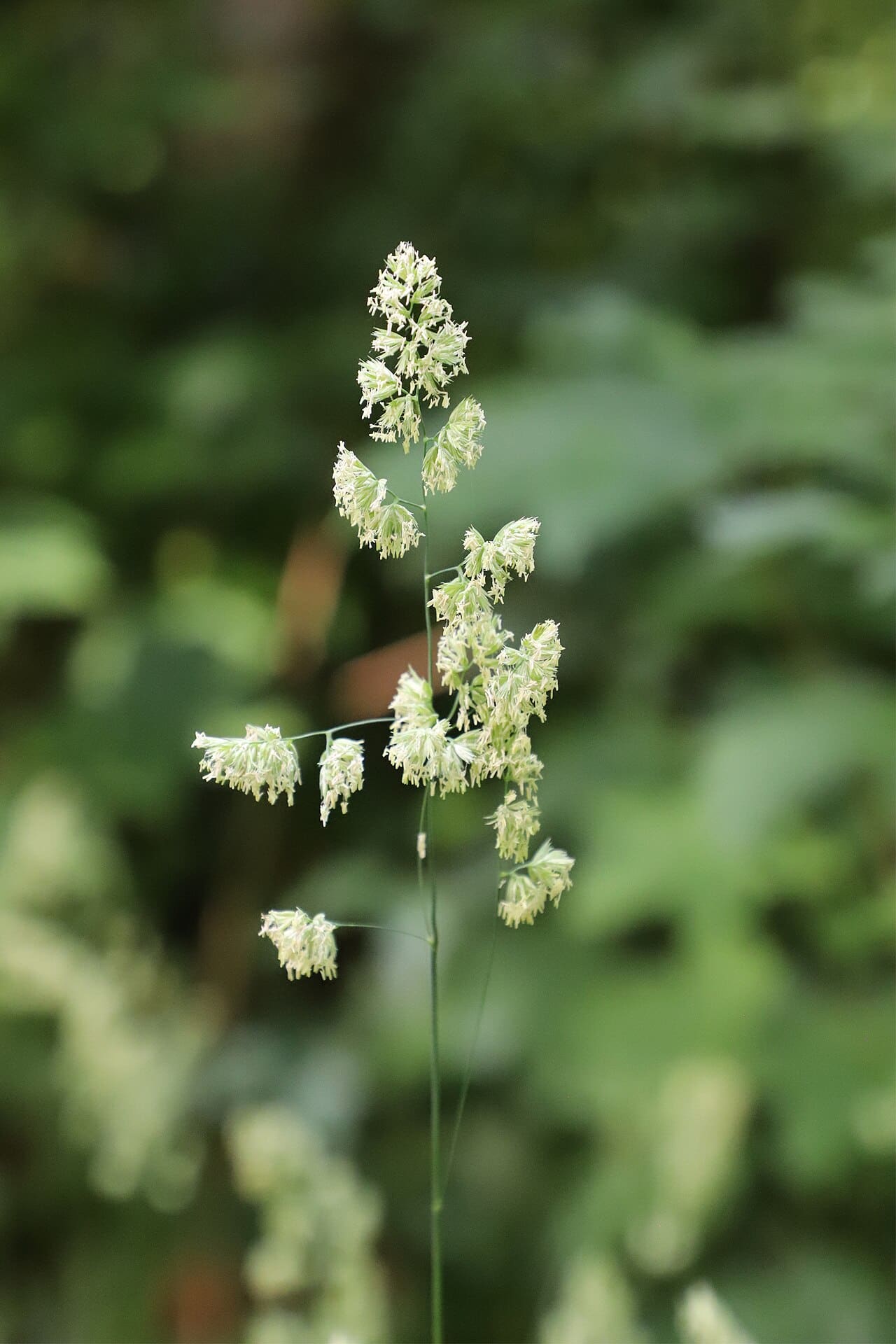
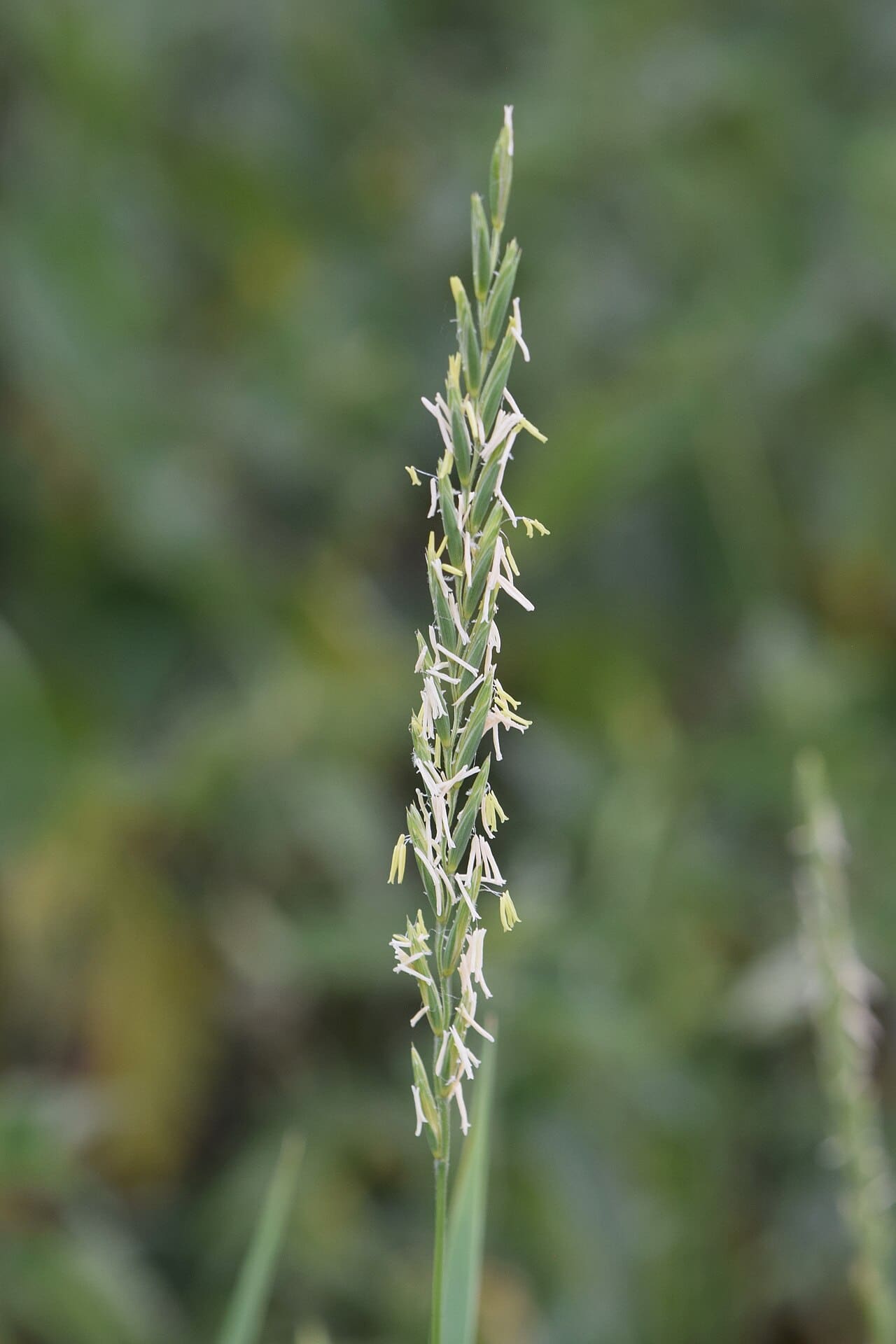
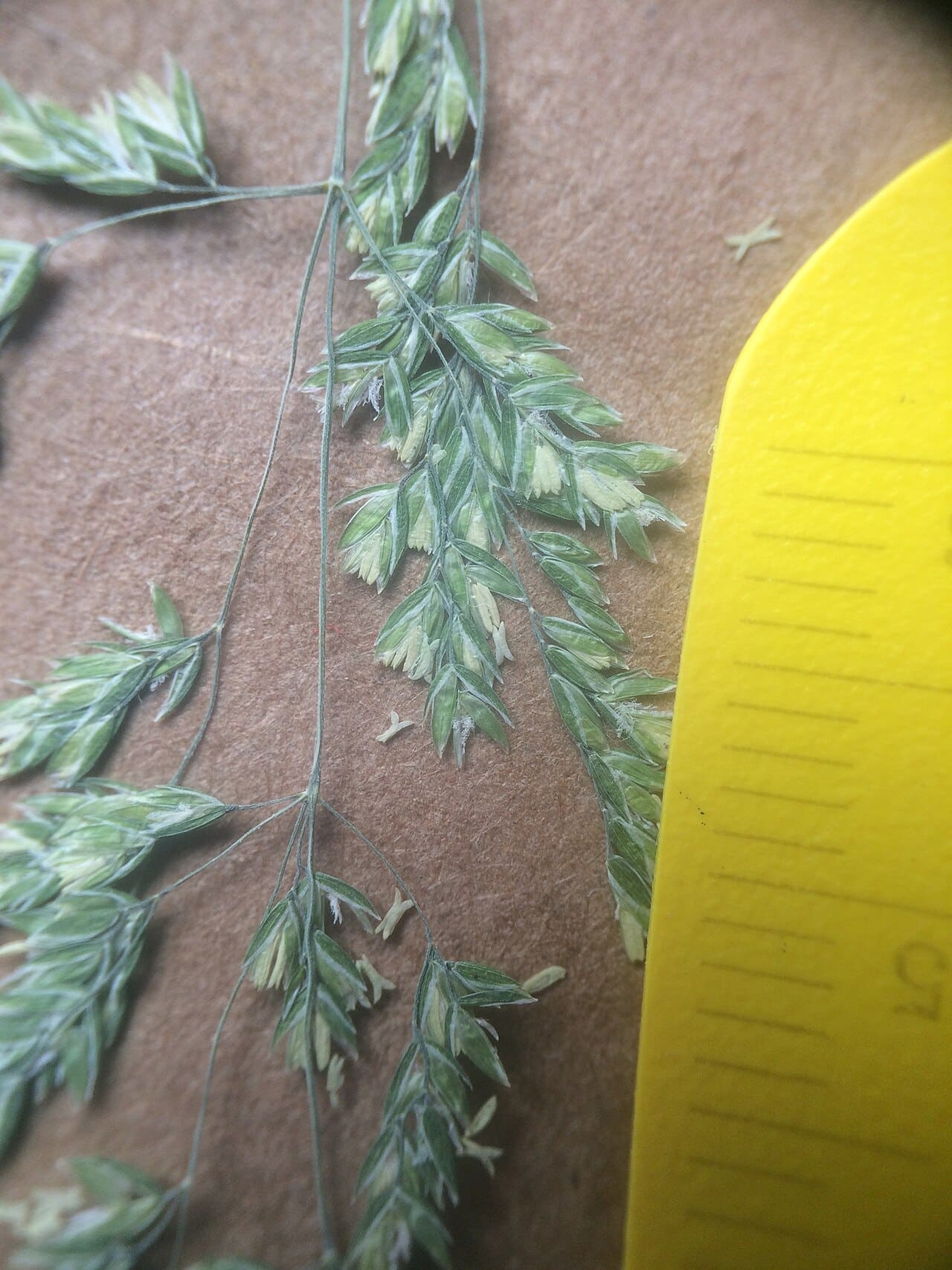
Here is a real photo of each weed. Use these to get close. Then check the shapes from the steps above to be sure. Remember, a photo can look a little different from the plant in your own yard.
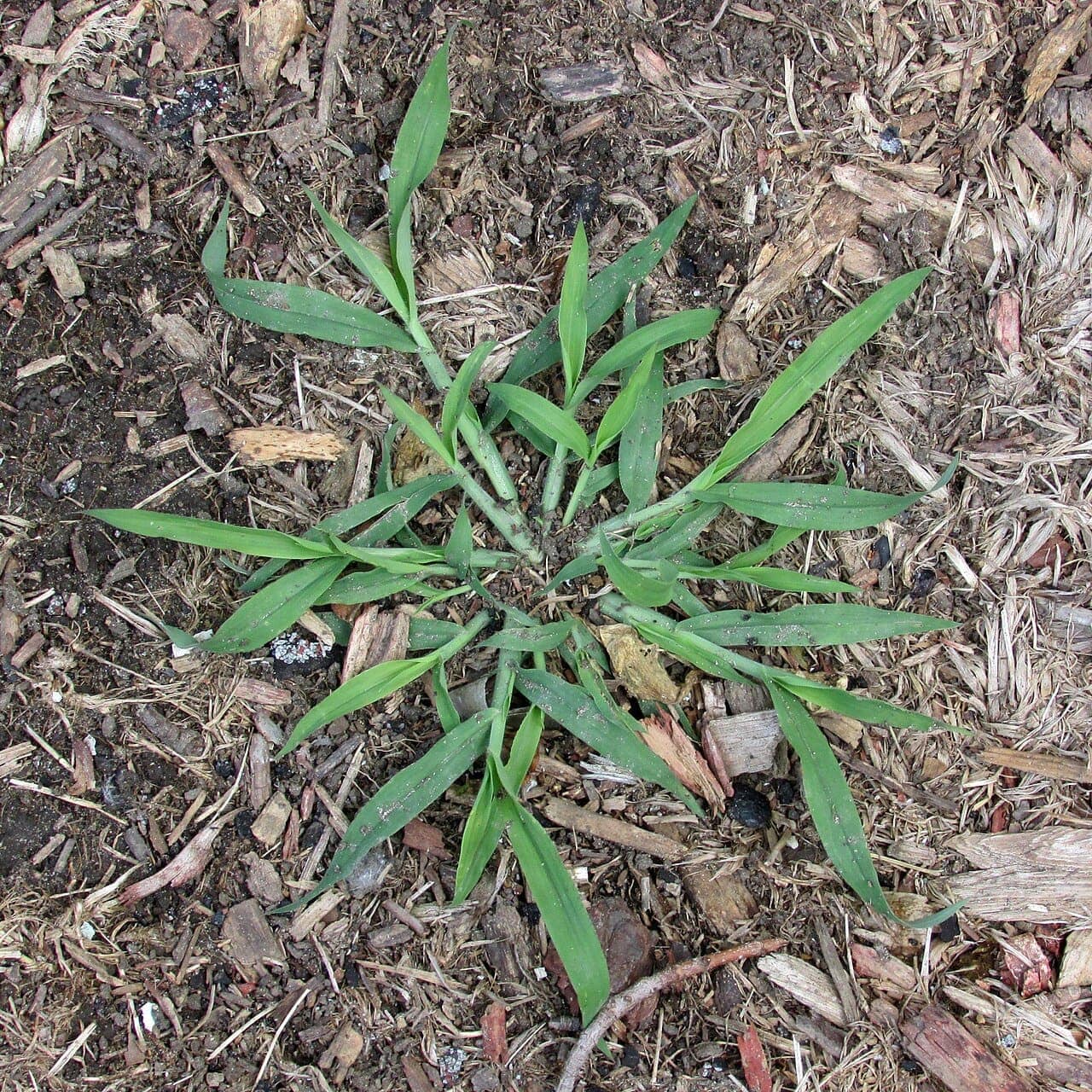
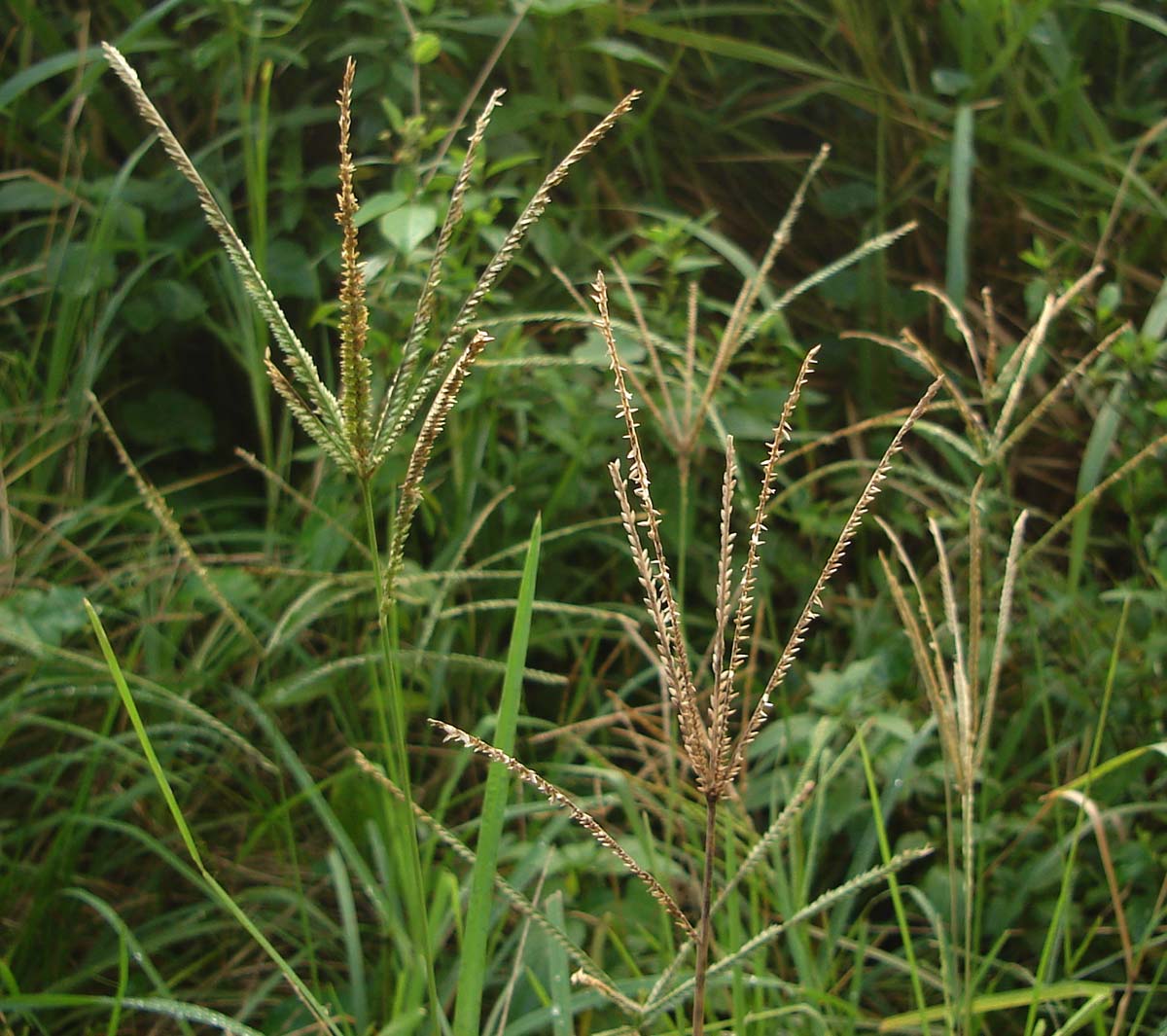
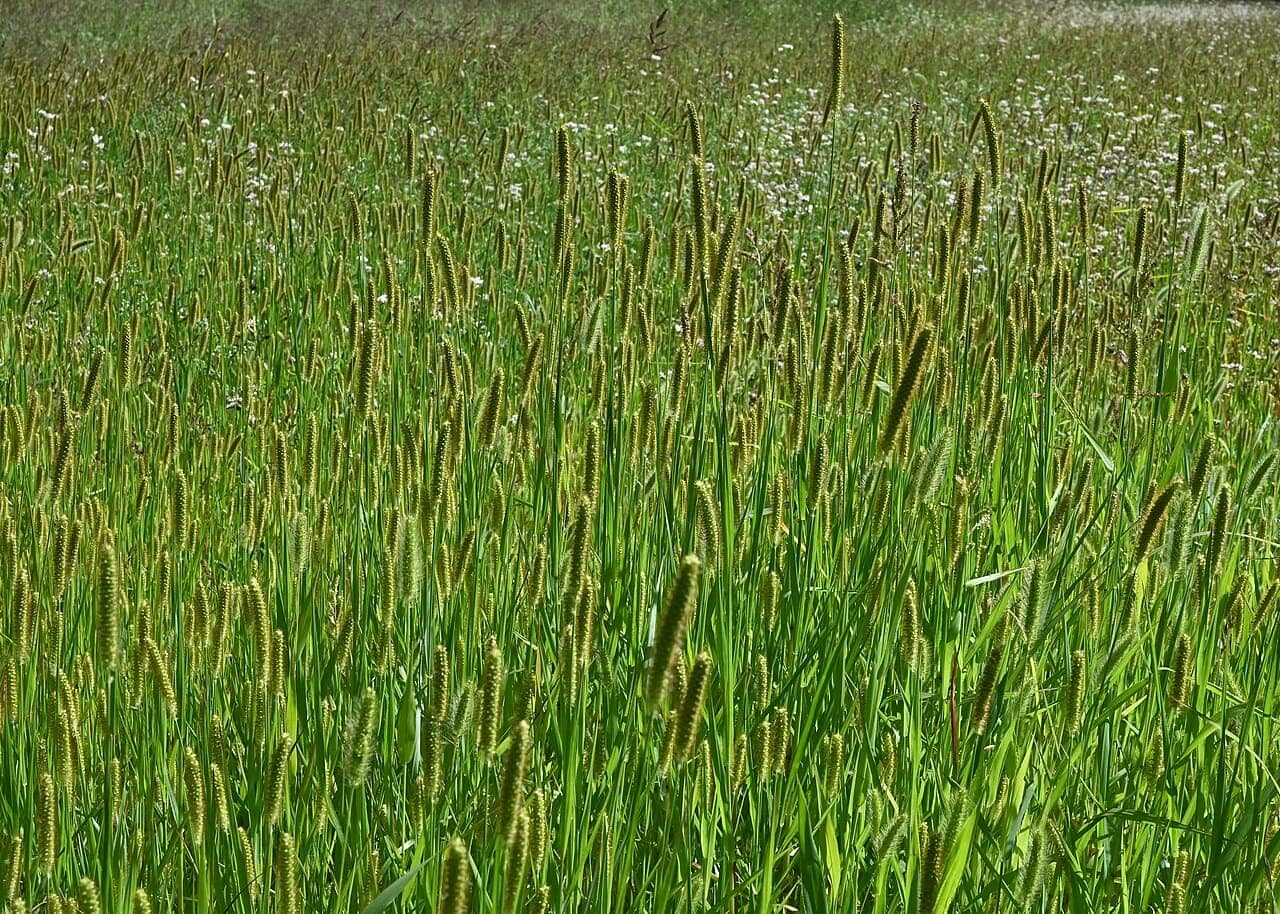
Quick Comparison Chart
| Weed | Season | How it spreads | Best clue to look for |
|---|---|---|---|
| Crabgrass | Warm-season annual | Seed (sprawls, roots at joints) | Low, spreading summer seedling; rolled new leaf |
| Goosegrass | Warm-season annual | Seed (tough flat mat) | White-to-silver flat base; folded new leaf |
| Foxtail | Warm-season annual | Seed (upright clump) | Hairy ligule; fuzzy fox-tail seed head |
| Nimblewill | Warm-season perennial | Stolons (runners on top) | Brown patch in spring; greens up very late |
| Tall fescue | Cool-season perennial | Bunch (clump) | Wide, coarse, dark blades; rolled new leaf |
| Orchardgrass | Cool-season perennial | Bunch (clump) | Blue-green, folded leaf; tall papery ligule; flat sheath |
| Quackgrass | Cool-season perennial | Rhizomes (runners under soil) | Clasping claws (auricles) at the collar |
| Roughstalk bluegrass | Cool-season perennial | Stolons (runners on top) | Light-green round patches; shiny leaf underside |
You Named It — Now What?
Once you have a good guess, the next move depends on which weed you found. Grassy weeds fall into two groups. They are handled in very different ways.
Group 1: Weeds where a careful, selective fix may be possible
This group is nimblewill and the summer annual grasses — crabgrass, goosegrass, and foxtail.
For nimblewill, Purdue says there is a selective weed killer (mesotrione) that can take it out of a cool-season lawn without killing the good grass. But it works slowly. The timing has to be right. And it usually takes more than one treatment. For annual grasses like crabgrass, the best control is not killing them after they show up. It is stopping the seed from sprouting in the first place. That means a pre-emergent treatment, put down at just the right time in spring. The right time depends on soil temperature. This is the heart of our spring lawn program. It is also the part that is easy to get wrong on your own.
One important note. Which products are legal for which weed changes over time. And the timing window is short. So if you think you found one of these weeds, the best move is to tell us what you found and why. Let us know which clues you saw — the time of year, the growth habit, the collar parts. That helps our team confirm it fast and treat it at the right time. A selective fix may be possible here. That is exactly what our programs are built for. So it is worth a quick call.
Here is a great example of why the name matters. The weed killer that helps with nimblewill will not remove tall fescue. Tall fescue just shrugs it off. Treating the wrong grass wastes time and money. That is why we always confirm the ID first.
Group 2: The clump and runner grasses with no selective fix
This group is tall fescue, orchardgrass, quackgrass, and roughstalk bluegrass. Here is the honest truth about them.
There is no spray that removes these grasses without killing your good grass too. Purdue and Iowa State note that an older selective product once used on tall fescue (Corsair) is no longer sold. And there is nothing selective for the others. They are grasses living in a lawn of grass. A weed killer cannot tell them apart from the turf you want to keep.
They are also stubborn. Tall fescue and orchardgrass grow back from the crown if any of it is left behind. Quackgrass and roughstalk bluegrass grow back from runner pieces. University of Minnesota and Michigan State both note that even a small chunk of quackgrass rhizome, left in the soil, can sprout into a brand-new plant. So getting rid of these grasses means removing the whole plant and its runners. Then you patch the bare spot with fresh seed.
That last part is where timing matters most. In Indiana, late summer to early fall is the best time to plant cool-season grass seed. The new grass fills in before winter. That is the same window our fall aeration and overseeding work is built around. A single stray clump might be dug out by hand, if you get the whole crown. But anything more than a clump or two really becomes a bigger reseeding job: the bad grass has to come out, and new seed has to go down at the right time so the lawn grows back even. Our fall aeration and overseeding work is how we get lawns thick again after that kind of cleanup. We are glad to walk your yard, make a plan, and line it up with the right season.
Not Sure What's Growing in Your Lawn?
Tell us what you found and why — our team will help you confirm the ID and plan the right next step.
Fort Wayne: 260-432-8900 | Marion: 765-660-8873
A Few Look-Alike Traps
Two grasses can fool you, and so can the time of year. Watch for these.
- It is only June and the “clump” is brown or barely there. Warm-season weeds are slow to wake up. On a cool early day, crabgrass, goosegrass, and foxtail are tiny seedlings, and nimblewill is still tan. A big lush clump that early is a cool-season grass instead.
- Flat leaves lying in a circle on the soil. Grasses do not grow in a flat rosette. If the leaves lie flat and spread out from one center — instead of standing up in a tuft — you are probably looking at a broadleaf weed, not a grass. That changes the answer, so it is worth a second look.
- Smooth brome. This one spreads in patches like quackgrass, but it has a tell: a light “W” or “M” shaped watermark across the blade. If you see that mark, it is brome, not one of the bunch grasses.
The Bottom Line
You can get surprisingly close to naming a grassy weed on your own. Just follow the order. Start with the time of year. Pull a plant to see how it grows. Then check the collar parts — vernation, ligule, auricles, and sheath. And trust the shapes, not the color. Color can fool you.
This is general advice for Indiana’s cool-season lawns. Real lawns can be tricky. If you are not sure, that is what we are here for. Tell us what you found and why. Our team in Fort Wayne and Marion will help you confirm the ID and pick the right next step.
Sources
- Purdue University Turfgrass Science (turf.purdue.edu), Aaron Patton — “When Will Crabgrass Germinate?,” “Smooth Crabgrass,” “Goosegrass,” “Nimblewill,” “Quackgrass,” and “Tall Fescue”
- Purdue Extension AY-11-W, “Identification and Control of Perennial Grassy Weeds in Lawns”
- Michigan State University Extension, “Quackgrass Control in Turf”
- University of Illinois Extension, “Grasses at a Glance: Comparing the Foxtails”
- Iowa State University Extension, “How Do I Control Tall Fescue in My Lawn?” (Yard and Garden)
- University of Minnesota Extension, “Quackgrass”
Photo credits
- Weed photos are used under Creative Commons or public-domain licenses via Wikimedia Commons. Credit and license for each are noted under the image above.
- The growth-habit, collar, and vernation drawings are original diagrams made for this article.