
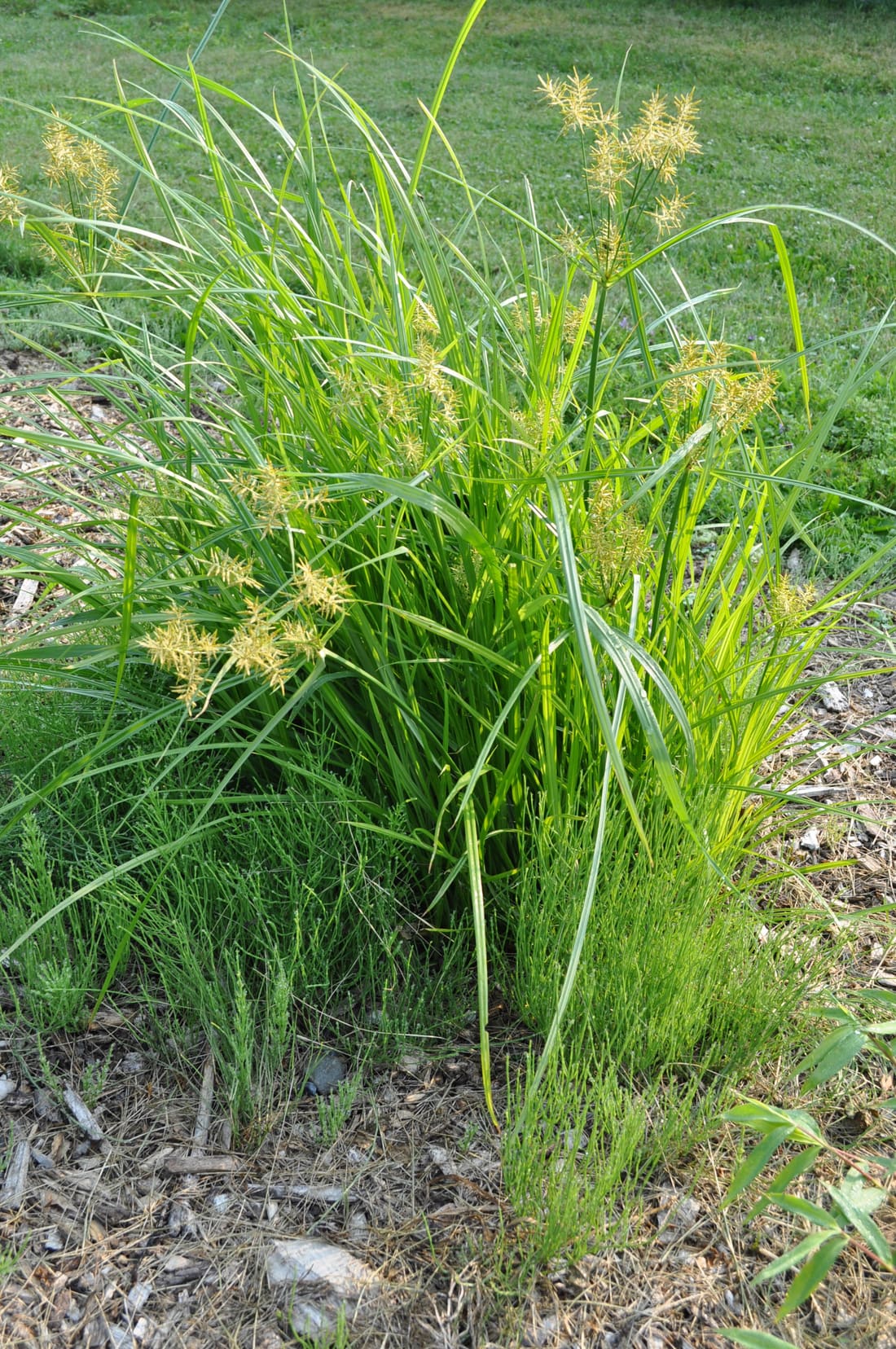
You mow on Saturday, and by Wednesday there are pale, spiky shoots standing a couple inches above the rest of the lawn. They are a lighter green than your grass, they grow back almost overnight, and the weed killer you used on your dandelions does nothing to them. That is nutsedge — and it is one of the most frustrating weeds we deal with across Fort Wayne and Marion every summer.
What Nutsedge Actually Is
Here is the first thing to understand: nutsedge is not a grass and it is not a broadleaf weed. It is a sedge, which is a completely different family of plant. The most common one in our area is yellow nutsedge (Cyperus esculentus), and that distinction is the whole reason it is so hard to kill, which we will get to in a minute.
Nutsedge is a warm-season perennial. According to Purdue Extension, it spreads mainly through small underground tubers — often called "nutlets" — that form at the tips of underground stems. A single nutsedge plant can produce several hundred of these tubers in one summer. Each tuber can sit in the soil and sprout into a brand-new plant, which is why a small patch turns into a big problem so quickly, and why pulling the tops out by hand almost never solves it.
When Nutsedge Shows Up
Nutsedge emerges from those underground tubers in late spring, but most homeowners do not notice it until June and July. There is a simple reason for that timing. Your cool-season lawn — the Kentucky bluegrass and fescue that does well in Northeast Indiana — slows way down once the summer heat sets in. Nutsedge does the opposite. It loves warm weather and grows fast right when your grass is taking it easy.
So even if it is sitting at the same height as your turf, it suddenly outgrows everything around it. That is why it seems to "appear" overnight a few days after mowing. It was there all along; it just shot past the grass.
Penn State Extension notes that the tubers begin to form in late June or early July. That detail matters more than it sounds, and it is the key to controlling this weed — more on that below.
How to Tell Nutsedge From Regular Grass
At a glance, nutsedge blends in with the lawn. But once you know what to look for, it is hard to un-see. Here is how our technicians tell it apart in the field:
It grows faster and taller than your grass. This is usually the first clue. If you see lighter-colored spikes standing above an otherwise level lawn a few days after mowing, that is almost always nutsedge.
The color is off. Nutsedge is a yellowish or light, glossy green — noticeably paler than healthy turf. The leaves have a slick, waxy, almost shiny look to them, and unlike many grasses, they have no hairs.
The stem is triangular. This is the dead giveaway. There is an old saying among turf folks: "sedges have edges." Grass stems are round and hollow. If you roll a nutsedge stem between your fingers, you can feel three distinct sides. Slice it across and you will see a little triangle.
The leaves come in threes. Nutsedge leaves grow in sets of three, spaced around the stem, with a long tapered tip and a prominent center vein.
If you have read our guide to telling grassy lawn weeds apart, nutsedge is the one weed in that lineup that is not actually a grass at all — which is exactly why it needs a different approach.
Why Your Weed Killer Doesn't Work on It
This is the part that trips up most homeowners. The broadleaf products that knock out dandelions and clover are built for broadleaf plants. Crabgrass preventers and grass-type killers are built for grasses. Nutsedge is neither, so it sails right through both.
Purdue Extension is direct about this: the traditional herbicides used to control dandelions and crabgrass are simply ineffective on yellow nutsedge because it is a sedge. Controlling it takes products specifically formulated for sedges, applied at the right stage of the plant's growth. Getting the product, the timing, and the conditions right is genuinely tricky, and it is one of the most common "I sprayed it three times and it keeps coming back" calls we get every July. That is the work we do — so you do not have to keep guessing at the store.
Timing Is Everything: Catch It While It's Small
Remember those tubers that form in late June and early July? That is the window that decides whether you win or lose against nutsedge.
Penn State Extension reports that control is most effective when the nutsedge is young — roughly the 3-to-8-leaf stage — and treated before the tubers begin to mature in mid-to-late summer. Once a plant matures and pumps out its several hundred tubers, you are no longer fighting one weed. You are seeding next year's infestation, and the year after that, because those tubers can stay dormant in the soil and sprout for years.
In plain terms: a small nutsedge plant you treat in early summer is a manageable problem. A mature patch you ignore until August has already done its damage underground. This is why our team gets after nutsedge during the summer treatment window rather than waiting — the goal is to stop it before it ever forms that next generation of tubers. If you are seeing those pale spikes now, this is the time to call us, not next month.
Why It Keeps Coming Back to Certain Yards
Nutsedge is not random. It favors specific conditions, and addressing those is part of any real fix. Purdue and Iowa State Extension both point to the same culprits:
Wet or poorly drained soil. Nutsedge thrives where the ground stays soggy — low spots, areas with poor drainage, or lawns that get over-watered. If you have a corner that is always damp, that is prime nutsedge territory. (If you are not sure you are watering right, our guide to watering is a good place to start.)
Mowing too short. Nutsedge is most aggressive in turf that is scalped. A taller lawn shades the soil and makes it harder for nutsedge to get established.
Thin, struggling turf. Like most weeds, nutsedge moves into gaps. The single best long-term defense, according to Purdue, is a thick, dense, vigorously growing lawn — which comes from proper mowing height, the right fertilization, and overseeding thin areas.
This is why we never treat nutsedge as a one-and-done spray. Knocking down the visible plants is only half the job. The other half is building turf dense enough that nutsedge has nowhere to move in — and that is exactly what our season-long programs are designed to do.
What We Do About It
Here is how our team handles nutsedge for homeowners in Fort Wayne and Marion:
First, we confirm it actually is nutsedge and not one of the grassy weeds it gets confused with — the treatment is completely different, and spraying the wrong thing wastes time during the narrow window that matters. Then we target it with sedge-specific control timed to the plant's growth stage, while it is still young and before it sets tubers. And we pair that with the cultural side — proper mowing height, balanced fertilization, and addressing the thin or soggy spots that invited the nutsedge in the first place.
Nutsedge is a weed that rewards moving early and punishes waiting. If you are seeing those tell-tale pale spikes shooting up above your lawn this summer, give our Fort Wayne or Marion office a call. Catching it small is the difference between one season of cleanup and several years of fighting tubers — and that is a fight we would rather you skip entirely.
Sources
- Purdue Extension TURF-45-W, "A Problem Weed: Controlling Yellow Nutsedge in Lawns" — PDF
- Purdue Extension AY-19-W, "Yellow Nutsedge Control" (Patton & Weisenberger) — Link
- Penn State Extension, "Lawn and Turfgrass Weeds: Yellow Nutsedge (Cyperus esculentus)" — Link
- Iowa State Extension, "How do I control yellow nutsedge in my lawn and garden?" — Link