
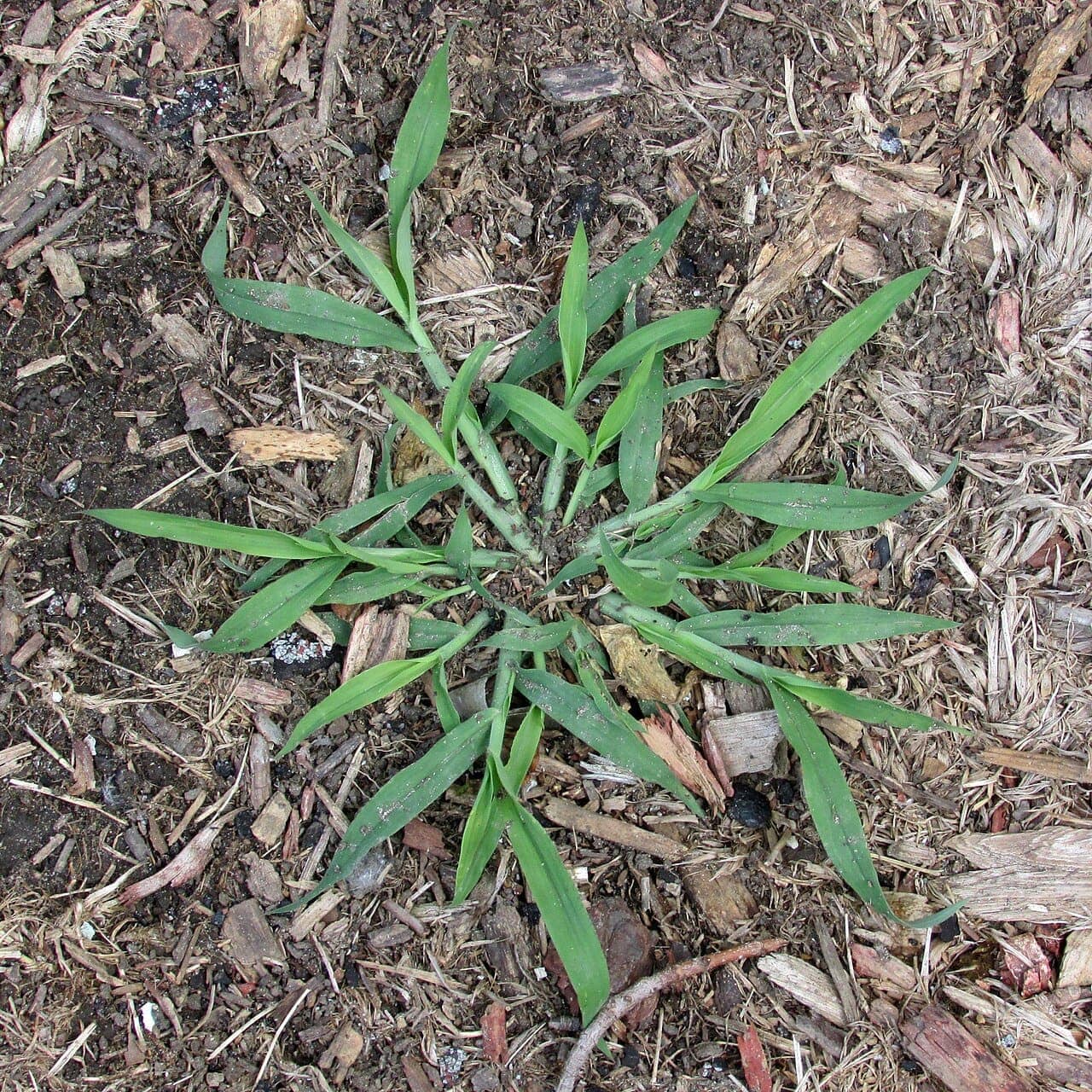
If you have ever watched crabgrass take over your lawn by July, you know how frustrating it is. It spreads fast, grows flat, and laughs at your mower. But here is the thing: by the time you can see crabgrass, it is already too late to stop it easily. The real fight happens weeks earlier, before a single seed sprouts. That is where pre-emergent herbicide comes in.
What Is a Pre-Emergent Herbicide?
A pre-emergent herbicide is a product you spread on your lawn that creates a chemical barrier in the top layer of soil. When crabgrass seeds try to germinate and push through that barrier, the herbicide stops them. The seeds never become plants.
Think of it like a invisible shield sitting just below the surface. It does not kill existing plants or existing weeds. It only works on seeds that have not sprouted yet. That is why the name matters: pre-emergent means before emergence.
Purdue Extension's guide on crabgrass control (AY-10-W) lists several proven pre-emergent active ingredients: prodiamine, dithiopyr, and pendimethalin. These are the same professional-grade active ingredients our treatment program uses. All of them work well when applied at the right time.
Why Crabgrass Is Such a Problem
Crabgrass is an annual weed. It sprouts from seed every spring, grows like crazy all summer, then dies with the first frost. But before it dies, a single crabgrass plant can drop thousands of seeds into your soil. Those seeds sit in the ground all winter, waiting for warm soil to trigger germination the following spring.
That means every crabgrass plant you let go to seed this year becomes hundreds of potential crabgrass plants next year. It is a cycle that gets worse over time if you do nothing about it.
We see this on properties across Fort Wayne and Marion every summer. A lawn that looks fine in May can be half crabgrass by August if it was not treated in the spring.
Timing Is Everything: Soil Temperature
Here is the most important thing to understand about pre-emergent: it only works if you apply it before crabgrass germinates. Apply it too late and the seeds have already sprouted. The barrier does nothing against plants that are already growing.
So when does crabgrass germinate? According to Purdue Extension turfgrass specialist Dr. Aaron Patton, crabgrass seeds germinate when soil temperatures reach approximately 60 degrees Fahrenheit for three to five consecutive days at a quarter-inch depth. Research from Purdue suggests that about 200 growing degree days (GDD) need to accumulate with a base of 50°F before germination begins.
For Fort Wayne, the average historical crabgrass germination date is around April 29. Marion is in the same general zone, so the timing is similar. That means your pre-emergent needs to be in the ground and watered in well before that date.
Michigan State Extension recommends applying pre-emergent when soil temperatures at a two-inch depth consistently reach 50 to 55 degrees. That is the sweet spot: warm enough that spring is truly arriving, but still ahead of crabgrass germination.
A Simple Way to Know When It Is Time
You do not need a soil thermometer to get the timing close (though they are cheap and helpful). There are two easy methods:
Watch the forsythia. Michigan State Extension notes that forsythia bushes blooming with their bright yellow flowers is a reliable environmental indicator that pre-emergent timing is right. When you see forsythia blooming around Fort Wayne or Marion, it is time to apply.
Use the GDD Tracker. Michigan State University built a free online tool at gddtracker.msu.edu that tracks growing degree days by zip code. Enter your zip code, click the Crabgrass PRE tab, and it will tell you whether your area is in the application window. When your area turns green on the map, you are good to go.
For most of northeast Indiana, the ideal application window is roughly late March through mid-April. Purdue research has shown that applying as early as March 1 can still be effective, so being a little early is much better than being a little late.
How Long Does Pre-Emergent Last?
According to Dr. Patton's research at Purdue, pre-emergent herbicides generally last 60 to 120 days in the soil. The exact duration depends on the product, the application rate, turf cover, temperature, and moisture levels.
This is important because crabgrass does not all germinate at once. Seeds keep sprouting throughout spring and into early summer as soil temperatures climb. If your pre-emergent wears off too soon, late-germinating seeds can still get through.
One strategy that Purdue and Michigan State both suggest: splitting the treatment into two applications spaced about 30 to 45 days apart. This is exactly how our program handles it — an early application followed by a scheduled booster that extends protection through the peak germination window.
What Pre-Emergent Does NOT Do
There are a few common misunderstandings about pre-emergent that are worth clearing up:
It does not kill existing weeds. If you already have crabgrass growing, pre-emergent will not help. You need a post-emergent herbicide for that. The one exception is dithiopyr, which Purdue notes can control crabgrass after germination up until it reaches one tiller. But do not count on this as your main strategy.
It does not just target crabgrass. Pre-emergent herbicides work on many annual weeds that germinate from seed. That includes foxtail, goosegrass, and some broadleaf annuals. So you get bonus weed control beyond just crabgrass.
It can prevent grass seed from germinating too. This is a big one. If you are planning to overseed your lawn this spring, do not apply pre-emergent to those areas. The herbicide does not know the difference between a crabgrass seed and a Kentucky bluegrass seed. Purdue Extension specifically warns against using most pre-emergent products on newly seeded lawns. There are seeding-safe options — ask us before you overseed and we will make sure the two do not work against each other.
The Other Half of Crabgrass Prevention
Pre-emergent is powerful, but it is not the whole story. Purdue Extension emphasizes that one of the best ways to control crabgrass is a dense, healthy lawn.
Crabgrass loves thin spots, bare soil, and low-cut turf. It needs sunlight to germinate. A thick lawn shades the soil surface and gives crabgrass seeds nowhere to grow. Purdue recommends maintaining a mowing height of about three inches to help shade out crabgrass and other weeds.
So pre-emergent plus good mowing habits plus proper fertilization gives you a three-layered defense. The pre-emergent catches the seeds that try to sprout. The thick turf makes it hard for any survivors to establish. And the right fertilizer schedule keeps your grass strong enough to outcompete weeds all season.
This is a job where professional equipment and timing make a real difference. At Signature Lawn & TreeMasters, our treatment programs for Fort Wayne and Marion homeowners include properly timed pre-emergent applications as part of a full-season plan. If you would rather not gamble on timing, our spring program handles all of it — give us a call at either our Fort Wayne or Marion office. We are happy to talk it through.
Ready to Stop Crabgrass Before It Starts?
Our spring treatment program includes pre-emergent timed for Northeast Indiana. Give us a call.
Fort Wayne: 260-432-8900 | Marion: 765-660-8873
How We Time Pre-Emergent
We apply before soil temperatures hit 60°F consistently. For Fort Wayne and Marion, that usually means late March through mid-April. We track soil temperatures across the season so the application lands inside the window, not after it closes.
We make sure it gets watered in. Pre-emergent needs about a half inch of water (rain or irrigation) within a few days of application to activate the barrier in the soil. We time applications around the forecast whenever we can.
We protect the barrier once it is down. Raking, aerating, or dethatching after a pre-emergent application breaks up the chemical barrier and creates gaps where crabgrass can sneak through. That is why our aeration work happens in the fall, not the spring.
We plan seeding around it. Pre-emergent and new grass seed do not mix, so we schedule overseeding for fall — or use a seeding-safe approach when spring seeding cannot wait.
We split the application. An early treatment followed by a scheduled booster extends protection through the full germination window.
The Bottom Line
Pre-emergent herbicide is one of the simplest and most effective things you can do for your lawn each spring. It stops crabgrass and other annual weeds before they ever become a problem. But the window to apply it is narrow, and once it closes, you are stuck fighting weeds all summer instead of preventing them.
If you are reading this in late March or early April, your window is open right now. Do not wait.
Sources
- Purdue Extension AY-10-W, "Control of Crabgrass in Home Lawns" — Purdue Education Store
- Purdue Extension AY-27-W, "Maintenance Calendar for Indiana Lawns"
- Purdue Extension, "Preventing Crabgrass" — extension.purdue.edu
- Purdue Turfgrass Science, "When Should I Apply My Preemergence Herbicide for Crabgrass Control?" — turf.purdue.edu
- Michigan State Extension, "Timing Crabgrass Preemergence Applications in Spring" — canr.msu.edu
- Michigan State University GDD Tracker — gddtracker.msu.edu