You water right. You mow at the right height. Your lawn looked great two weeks ago. Then one morning you walk outside and see weird patches, dead spots, or grass that looks like it gave up overnight. What happened? Chances are, a fungal disease moved in while you were not looking. Here is how to catch the three most common ones before they take over your yard.
Why Lawn Disease Shows Up in Summer
Fungal diseases need three things to attack your lawn: a susceptible grass type, a pathogen in the soil, and the right weather conditions. Purdue Extension calls this the "disease triangle" (BP-124-W). Take away any one of those three and the disease cannot develop.
The problem is that summer in Fort Wayne and Marion delivers all three at once. Our cool-season grasses, mostly Kentucky bluegrass and tall fescue, are already stressed by heat. The pathogens live in the soil year-round. And Indiana's humid nights with heavy dew give fungi exactly the moisture they need to spread.
That is why July and August are peak disease season. The good news is that each disease has a distinct look, and once you know what to watch for, you can catch problems early, before they spread across your whole yard.
Red Thread: The Pink Fuzz on Your Lawn
Red thread is usually the first disease homeowners notice in a season. Purdue Extension (BP-104-W) describes it as one of the most common turf diseases in Indiana, caused by the fungus Laetisaria fuciformis.
What it looks like. You will see irregular patches of tan or bleached-looking grass, usually four to eight inches across. Look closely at the tips of the blades and you will spot the signature feature: tiny pink or red thread-like strands poking out from the leaf tips. In humid conditions those threads can look almost coral-colored. From a distance the patches have a pinkish cast that is hard to miss once you know what you are looking for.
When it shows up. Red thread is most active between 65 and 75 degrees Fahrenheit, which means it thrives in late spring and early fall in our area. But it can appear anytime temperatures sit between 40 and 80 degrees with extended moisture on the leaf surface.
Why it happens. Purdue notes that nitrogen-deficient lawns are the most susceptible. The fungus attacks turf that is hungry and stressed. Perennial ryegrass and fine fescues are especially vulnerable, but Kentucky bluegrass gets it too.
The silver lining. Red thread is mostly cosmetic. It damages leaf blades but does not kill the crown or roots, so the grass can recover. But "cosmetic" does not mean harmless. Left unchecked, the patches spread and your lawn looks worse every week. And a lawn weakened by red thread is an open invitation for weeds to move in.
Dollar Spot: Small Circles, Big Problems
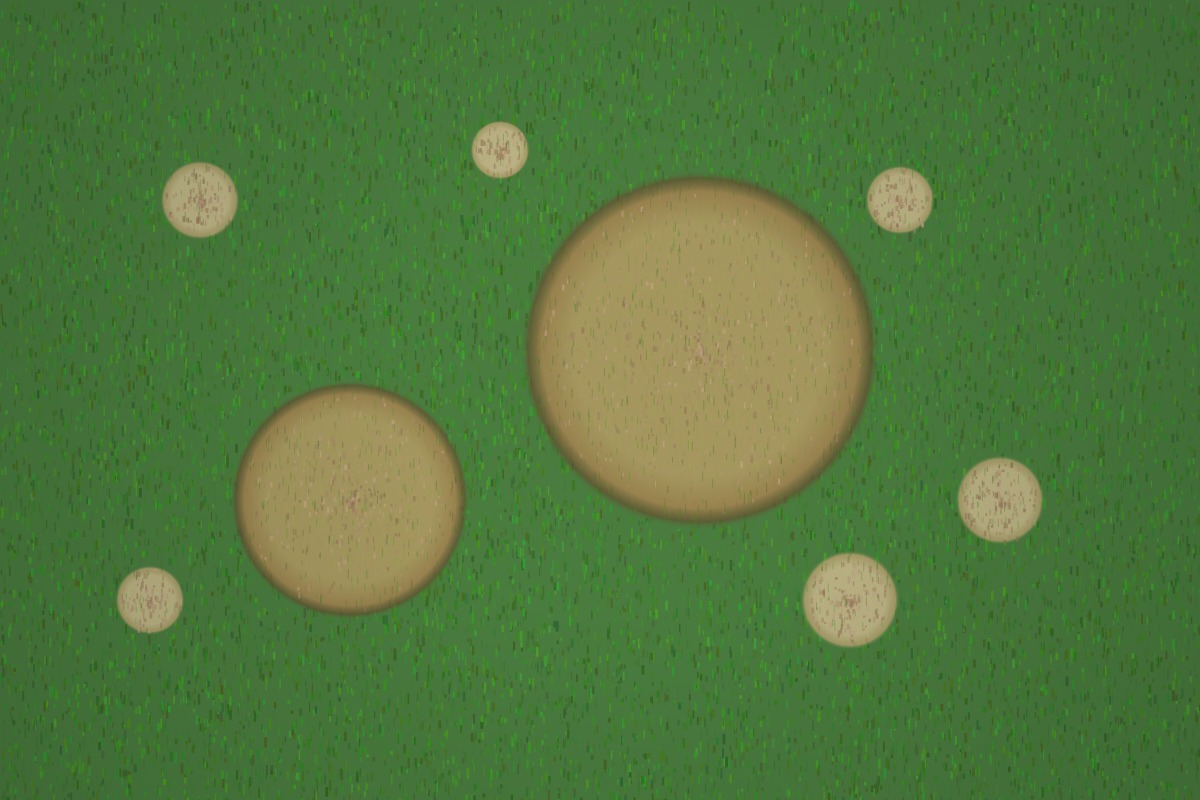
Dollar spot gets its name from the size of the dead patches it creates, roughly the size of a silver dollar. But those small circles can merge into large dead areas fast. Purdue Extension (BP-105-W) identifies the pathogen as Clarireedia jacksonii, and it is one of the most widespread turf diseases in the Midwest.
What it looks like. Individual spots start as small, round, straw-colored patches about two to three inches across. On individual grass blades, you will see hourglass-shaped lesions, bleached tan in the center with reddish-brown borders. In the early morning when dew is still on the grass, you might notice a fine, cobwebby mycelium on the surface. When many spots merge together, they form large irregular dead areas that can ruin a lawn's appearance in a matter of days.
When it shows up. Dollar spot is active across a wide temperature range, from 55 to 85 degrees, which means it can attack from late spring all the way through fall. It is worst during stretches of warm days, cool nights, and heavy morning dew. If your grass stays wet for eight or more hours at a time, conditions are ideal for dollar spot.
Why it happens. Like red thread, dollar spot hits hardest on lawns that are low on nitrogen. Purdue emphasizes that proper fertility is one of the most important factors in preventing dollar spot. Drought stress and heavy thatch also make lawns more vulnerable. Michigan State Extension adds that compacted soils and poor air circulation create conditions where the disease thrives.
Brown Patch: The Summer Heavyweight
Brown patch is the one that keeps lawn care professionals busy in July and August. Caused by Rhizoctonia solani, it is the most damaging of the three diseases we are covering here. Purdue Extension (BP-106-W) describes it as a major problem for tall fescue in particular, but it attacks all cool-season grasses.
What it looks like. Brown patch creates circular areas of dead-looking grass that can range from a few inches to several feet across. The key identifier is the "smoke ring," a dark, grayish-purple border around the edge of the patch that is easiest to see in the early morning when the grass is still wet. Inside the ring, the grass looks water-soaked at first, then dries to a light brown. Older patches may have green grass regrowing in the center, giving them a doughnut appearance.
When it shows up. Brown patch needs heat. It kicks in when nighttime temperatures stay above 65 degrees and daytime highs push past 80. In Fort Wayne and Marion, that window is typically mid-June through August. High humidity and extended leaf wetness, more than ten hours, make it worse.
Why it happens. Here is where brown patch flips the script on the other two diseases. While red thread and dollar spot attack hungry lawns, brown patch gets worse with too much nitrogen. Purdue notes that excessive nitrogen fertilization in summer is a major risk factor. Overwatering and watering in the evening, which keeps grass wet overnight, also fuel the disease. Ohio State Extension confirms that cultural practices like evening irrigation directly contribute to brown patch severity.
How to Tell Them Apart
All three diseases create patches of dead or discolored grass, but the details are different enough to tell them apart:
Red thread has those distinctive pink or red threads at the blade tips. The patches tend to be small and irregularly shaped with a pinkish tone.
Dollar spot starts as silver-dollar-sized circles with hourglass lesions on individual blades. Look for the cobwebby mycelium at dawn.
Brown patch creates larger circular patches with a dark smoke ring border. The grass inside looks water-soaked before it dries out.
The timing helps too. Red thread favors the cooler shoulder seasons. Dollar spot works across a wide range but peaks in warm, dewy weather. Brown patch is strictly a hot-weather disease that needs warm nights.
What You Can Do Right Now
You cannot control the weather, but you can control the conditions that make disease worse:
Water in the early morning. This lets the grass dry during the day, cutting down the hours of leaf wetness that fungi need. Watering in the evening is one of the worst things you can do during disease season. Our WaterOrNot tool can help you decide whether your lawn even needs water today.
Mow at the right height. Keep your mower at three to three and a half inches through summer. Taller grass is more resilient, and mowing too low adds stress that makes disease worse.
Do not ignore it. The earlier a disease is caught, the easier it is to manage. A small patch of dollar spot today can become a large dead zone in two weeks. If you see something that does not look right, it is worth getting a professional eye on it sooner rather than later.
Why Diagnosis Matters More Than Guessing
Here is the tricky part. Red thread needs more nitrogen to recover. Brown patch gets worse with more nitrogen. If you guess wrong and throw down fertilizer on a brown patch outbreak, you just made the problem worse. And dollar spot can look a lot like drought stress early on, which leads homeowners to water more, which creates the wet conditions the fungus loves.
That is why accurate diagnosis is everything. Our lawn disease and insect program starts with identifying exactly what is going on in your turf before we treat it. Purdue Extension's seasonal disease chart (BP-125-W) shows that multiple diseases can be active at the same time, which makes proper identification even more critical.
The diseases we have covered here are treatable, and in many cases preventable with the right fertility program and cultural practices. But the window between "small patch" and "big problem" can close fast in an Indiana summer. If your lawn is showing symptoms, the smartest move is getting it looked at now, before the next round of ninety-degree days gives the fungus another growth spurt.
Sources
- Purdue Extension BP-104-W, "Red Thread of Turfgrasses"
- Purdue Extension BP-105-W, "Dollar Spot of Turfgrasses"
- Purdue Extension BP-106-W, "Brown Patch of Turfgrasses"
- Purdue Extension BP-124-W, "Turfgrass Disease Profiles — Disease Triangle"
- Purdue Extension BP-125-W, "Seasonal Occurrence of Turfgrass Diseases in Indiana"
- Michigan State Extension, "Managing Lawn Diseases"
- Ohio State Extension BYGL, "Red Thread and Other Common Lawn Diseases"